

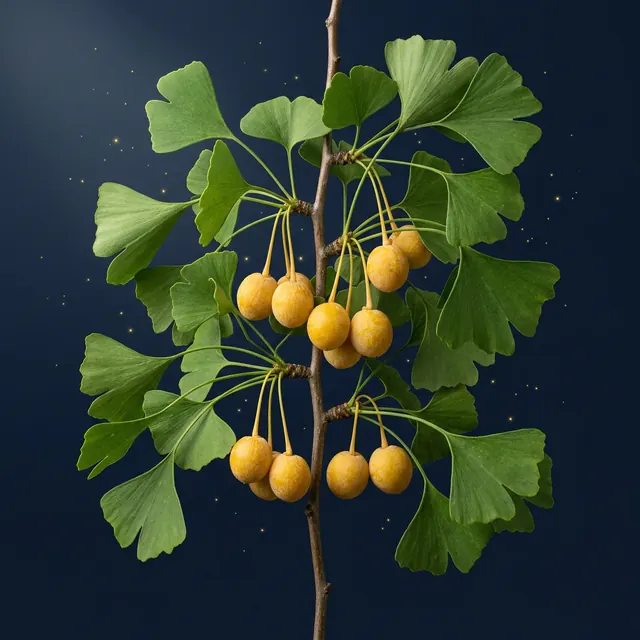
Ginkgo
Ginkgo biloba L.
Polish folk names: miłorząb japoński, miłorząb chiński, ginkgo
Traditional use
According to the EMA/HMPC, a standardised dry extract of the leaves (well-established use) improves age-related cognitive disorders in adults and quality of life in mild dementia. Traditionally (EMA/HMPC) the powdered leaf relieves a feeling of heavy legs and cold hands and feet in minor circulatory disorders, after a serious disease has been ruled out by a doctor. Studies have not confirmed that ginkgo prevents dementia.
What it looks like
Park tree up to 30 m tall in Poland, planted, not growing wild. Leaves fan-shaped, leathery, with fan-like venation and no midrib, usually notched into two lobes, golden yellow in autumn. Female trees bear seeds in a globose, yellow, fleshy outer layer 2–3 cm across, which smells of rancid butter once ripe.
Harvest
Gathered: leaf.
When: June – September.
Form: standardised extract (pharmacy preparation), powdered leaf (pharmacy preparation).
Lookalikes
- There are no similar trees in Poland - the fan-shaped, two-lobed leaf is unmistakable
- The seeds in a yellow, foul-smelling coating look like small plums or mirabelles, but are poisonous (ginkgotoxin can cause convulsions), and the coating irritates the skin
The information is educational and describes traditional use according to EMA/HMPC monographs (the European Medicines Agency and its Committee on Herbal Medicinal Products).It does not replace the advice of a doctor or pharmacist. Never eat a plant you are not 100% sure you recognise.