

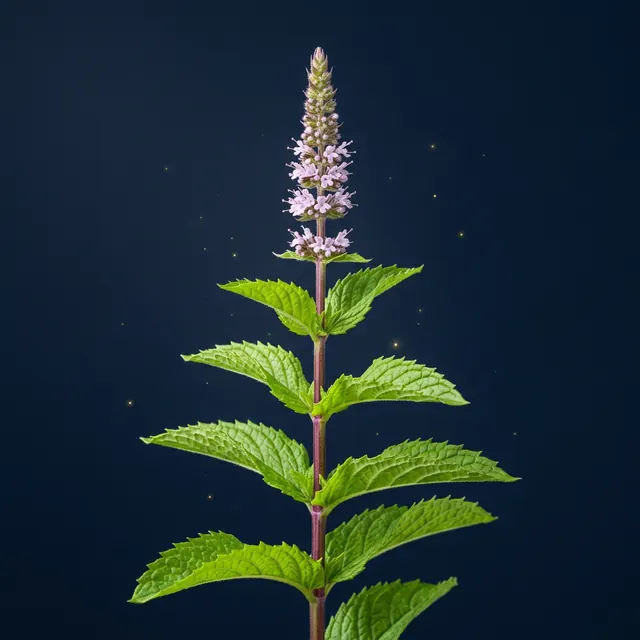
Spearmint
Mentha spicata L.
Polish folk names: mięta kłosowa
Traditional use
No EMA monograph (the monograph concerns peppermint). Above all a spice and tea; traditionally regarded as improving digestion. A small study (42 women, 30 days) showed a drop in testosterone in women with polycystic ovary syndrome who drank its infusion - this is too little to recommend it as a treatment.
What it looks like
Perennial 40–120 cm tall with a thick rhizome, naturalised in Poland from cultivation. Stem hairless, square in cross-section. Leaves oblong to lanceolate, almost sessile, toothed, hairless. Pale lilac flowers in slender spikes at the tips of the shoots. Scent sweet, caraway-like (carvone), not minty.
Harvest
Gathered: leaf, herb (aerial parts).
When: June – September.
Form: infusion, kitchen.
Lookalikes
- peppermint - leaves with stalks, menthol scent; harmless
- other mints - hybridise easily; harmless
The information is educational and describes traditional use according to EMA/HMPC monographs (the European Medicines Agency and its Committee on Herbal Medicinal Products).It does not replace the advice of a doctor or pharmacist. Never eat a plant you are not 100% sure you recognise.