

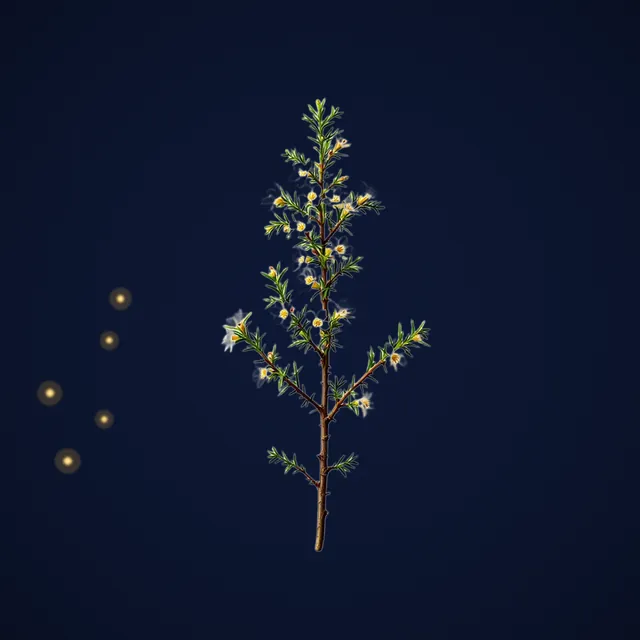
Mānuka
Leptospermum scoparium J.R.Forst. & G.Forst.
Polish folk names: mānuka, drzewo herbaciane Cooka, nowozelandzkie drzewo herbaciane
Traditional use
[TRADITION] The Māori drank an infusion of mānuka leaves for fever and colds, inhaled the steam from boiled leaves and rinsed the mouth and throat with a decoction of the bark. Captain Cook’s crew brewed a “tea” from it against scurvy. Today the best known is manuka honey: sterile medical honey is sometimes used in hospitals on wounds and burns. A 2015 Cochrane review concluded that honey may speed up the healing of superficial burns, but the evidence for other wounds is weak.
What it looks like
A shrub or small tree 2–5 m tall with peeling bark. Leaves tiny, stiff, prickly. Flowers white or pinkish, with five round petals and a dark red centre. Woody capsules stay on the twigs for years.
Harvest
Gathered: leaves, bark, honey from the nectar.
Form: infusion, rinse, honey.
Lookalikes
- kānuka (Kunzea ericoides) – very similar, but the leaves are soft, not prickly, and the capsules are small and drop quickly
- tea tree (Melaleuca alternifolia) – the Australian source of “tea tree” oil
The information is educational and describes traditional use according to EMA/HMPC monographs (the European Medicines Agency and its Committee on Herbal Medicinal Products).It does not replace the advice of a doctor or pharmacist. Never eat a plant you are not 100% sure you recognise.