

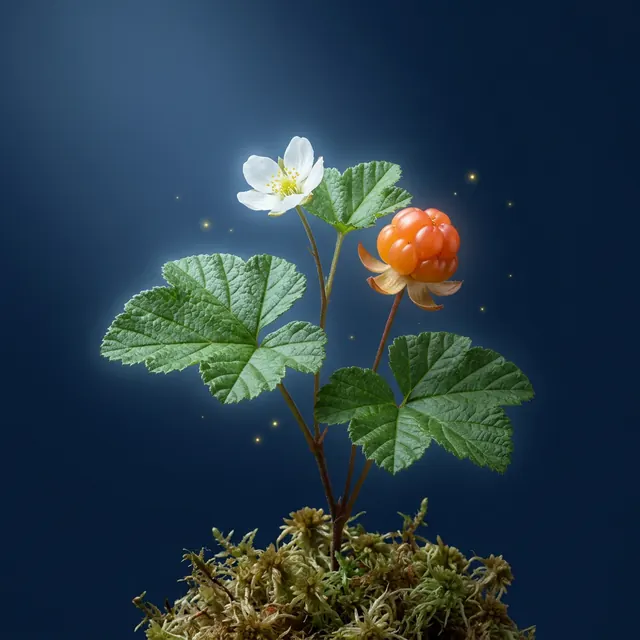
Cloudberry
Rubus chamaemorus L.
Polish folk names: moroszka, malina nordycka
Traditional use
In the Nordic countries, cloudberry jams and wines are a national delicacy. In the folk medicine of the North the fruit and leaves were used as a fever remedy, against diarrhoea and against scurvy; thanks to benzoic acid the fruit keeps for a long time, and Arctic hunters ate it against scurvy. There is no EMA monograph and there are no clinical studies.
What it looks like
Low plant, 10–30 cm, without thorns, with a rhizome. Leaves simple, heart- to kidney-shaped, mostly 5-lobed, finely serrated. Solitary white flowers (the plant is dioecious). Fruit made up of several drupelets, red at first, amber-orange when ripe. Grows in raised bogs.
Harvest
Gathered: fruit, leaf.
When: June – August.
Form: fruit and preserves (kitchen), infusion of the leaves.
Lookalikes
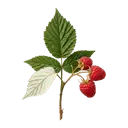
- raspberry – thorny shrub, red fruit; harmless
- blackberries (brambles) – prickly shoots; harmless
The information is educational and describes traditional use according to EMA/HMPC monographs (the European Medicines Agency and its Committee on Herbal Medicinal Products).It does not replace the advice of a doctor or pharmacist. Never eat a plant you are not 100% sure you recognise.