

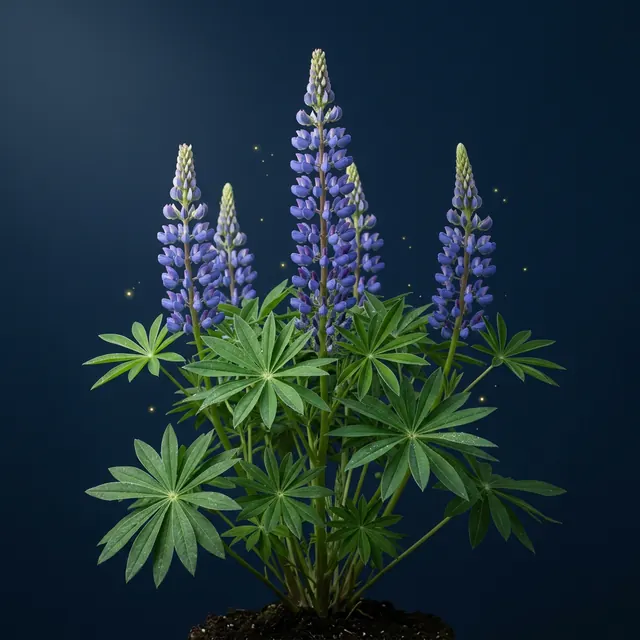
Garden lupin
Lupinus polyphyllus Lindl.
Symptoms of poisoning
After about 20 minutes: abdominal pain, vomiting, diarrhoea, dry mouth, visual disturbances, heart problems; in severe cases convulsions, paralysis and death from respiratory paralysis or cardiac arrest.
What it looks like
Invasive perennial of roadsides and forest edges, up to 1.5 m, in dense clumps. Leaves palmate, with 5–15 lanceolate leaflets radiating outwards. Flowers pea-like, usually blue-violet, sometimes pink or white, in tall, dense racemes 15–60 cm long. Pods hairy, 2.5–4.5 cm, dark brown when ripe.
What it is sometimes confused with
- seeds of sweet (food-grade) lupin – wild seeds are bitter and rich in alkaloids
- peas and beans (hairy pods – mainly children)
The information is educational and describes traditional use according to EMA/HMPC monographs (the European Medicines Agency and its Committee on Herbal Medicinal Products).It does not replace the advice of a doctor or pharmacist. Never eat a plant you are not 100% sure you recognise.