

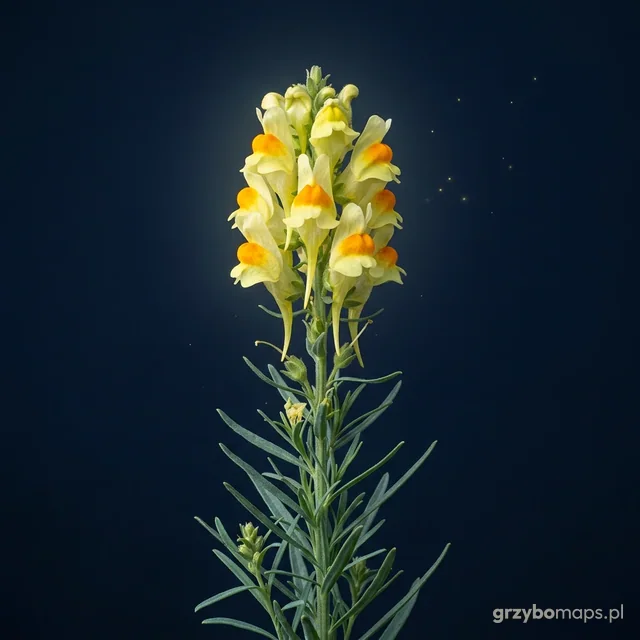
Common toadflax
Linaria vulgaris Mill.
Polish folk names: lnianka, żabi len
Traditional use
In the past used as a laxative and diuretic, and externally in ointments and compresses for haemorrhoids, eczema and ulcers. No good scientific evidence and no EMA monograph.
What it looks like
Perennial 20–60 cm tall with a densely leafy stem and narrow, blue-green leaves. Pale yellow flowers in a raceme, with an orange “palate” bulge and a long spur – they resemble a lion's mouth.
Harvest
Gathered: herb (aerial parts).
When: June – August.
Form: compress, ointment.
Lookalikes
- Cypress spurge: similar narrow leaves, but white, poisonous milky sap and green-yellow flower clusters – toadflax has no milky sap
The information is educational and describes traditional use according to EMA/HMPC monographs (the European Medicines Agency and its Committee on Herbal Medicinal Products).It does not replace the advice of a doctor or pharmacist. Never eat a plant you are not 100% sure you recognise.