

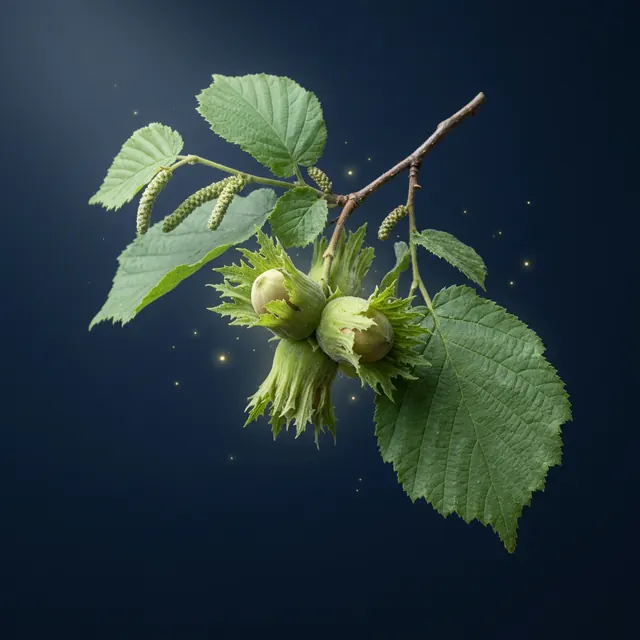
Common hazel
Corylus avellana L.
Polish folk names: orzech laskowy
Traditional use
No EMA monograph. Hazel is above all an edible plant: hazelnuts have been eaten since prehistoric times, and their oil goes into salads and cosmetics. A diet with hazelnuts is associated with lower LDL and total cholesterol. In the past they were recommended to weakened and exhausted people; this is a food tradition, not a proven treatment.
What it looks like
Multi-stemmed shrub 5–8 m tall with smooth, grey-brown bark. Leaves broad, roundish, up to 13 cm, doubly serrated, with a heart-shaped base, softly hairy. Flowers in February and March: drooping yellow male catkins and tiny red stigmas of the female flowers. Nuts up to 2.5 cm, in a green, ragged husk.
Harvest
Gathered: nut, nut oil.
When: August – September.
Form: kitchen, oil.
Lookalikes
- Hornbeam - leaves similar, serrated, but narrower and with parallel veins; the fruits are small nutlets on three-lobed wings; harmless
- Turkish hazel - a tree, not a shrub, the husk of the nut is heavily frayed; the nuts are edible
The information is educational and describes traditional use according to EMA/HMPC monographs (the European Medicines Agency and its Committee on Herbal Medicinal Products).It does not replace the advice of a doctor or pharmacist. Never eat a plant you are not 100% sure you recognise.