

New Zealand flax
Phormium tenax J.R.Forst. & G.Forst.
Polish folk names: harakeke, len nowozelandzki, formium
Traditional use
[TRADITION] Harakeke is the Māori's most important fibre plant. In rongoā the clear gum from the leaf base was applied to burns, wounds and frostbite, and the broad leaves were used as dressings and splints. A decoction of the root was drunk as a laxative. There are no clinical studies.
What it looks like
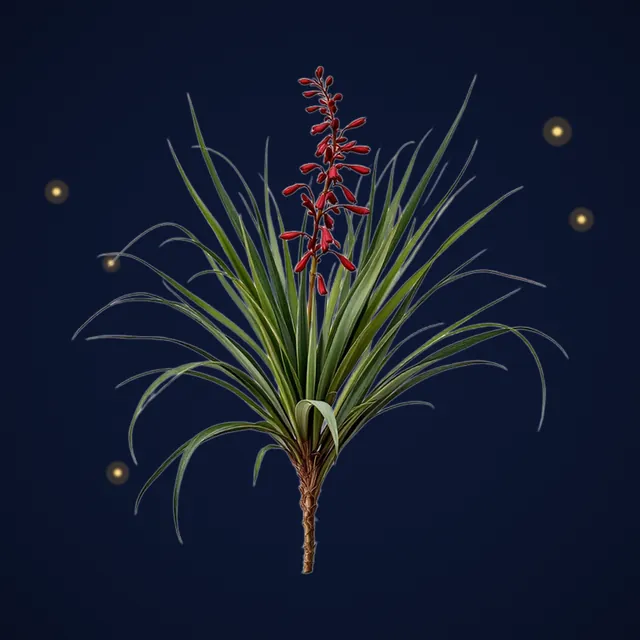
A tufted perennial with stiff, sword-shaped leaves 1–3 m long, arranged in a fan. In summer it sends up a dark stalk up to 4 m with dull-red, tubular flowers full of nectar. In Poland it is grown in pots.
Harvest
Gathered: gum from the leaf base, root, fibre from the leaves.
Form: poultice (tradition), fibre.
Lookalikes
- common flax – an unrelated, delicate plant with blue flowers
- yucca and agave – similar habit, but the leaves are fleshy or have a spine
The information is educational and describes traditional use according to EMA/HMPC monographs (the European Medicines Agency and its Committee on Herbal Medicinal Products).It does not replace the advice of a doctor or pharmacist. Never eat a plant you are not 100% sure you recognise.