

Wood avens
Geum urbanum L.
Polish folk names: goździkowy korzeń, benedyktowe ziele
Traditional use
Traditionally for diarrhoea and catarrh of the digestive tract (tannins), as a rinse for mouth ulcers. A Health Canada monograph lists traditional use for diarrhoea and fever; there is no EMA monograph.
What it looks like
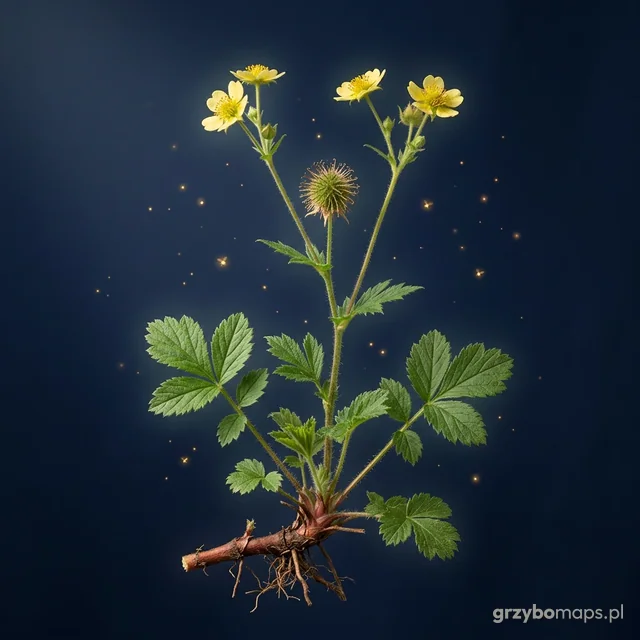
Perennial 30–60 cm tall from forests and thickets. Basal leaves pinnate with a large terminal leaflet. Small yellow flowers with 5 petals; fruits with hooked beaks cling to clothing. The fresh rhizome smells of cloves.
Harvest
Gathered: rhizome with roots, herb (aerial parts).
When: March, April, September, October.
Form: decoction, rinse.
Lookalikes
- Water avens: drooping, bell-shaped, pinkish-brown flowers; wood avens has yellow, flat, upright flowers
The information is educational and describes traditional use according to EMA/HMPC monographs (the European Medicines Agency and its Committee on Herbal Medicinal Products).It does not replace the advice of a doctor or pharmacist. Never eat a plant you are not 100% sure you recognise.