

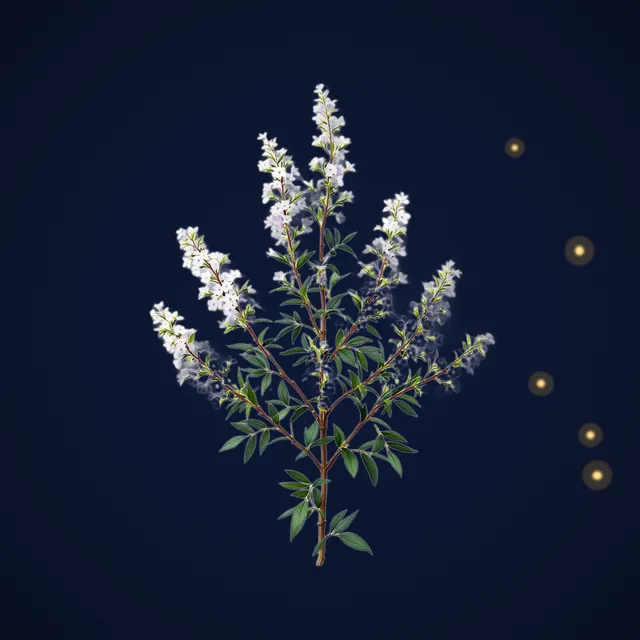
Koromiko
Veronica salicifolia G.Forst. (syn. Hebe salicifolia)
Polish folk names: hebe wierzbolistna, koromiko, kōkōmuka
Traditional use
[TRADITION] In rongoā, the traditional medicine of the Māori, young koromiko buds were chewed for diarrhoea and stomach ache, and the leaves were applied to wounds. During the Second World War, dried leaves were sent to New Zealand soldiers in North Africa as a remedy for dysentery. There are no modern clinical studies.
What it looks like
An evergreen shrub 2–5 m tall. Leaves narrow like a willow’s, 5–15 cm long, opposite. Small white or pale lilac flowers in long, drooping racemes. At the end of the shoot two young leaves form a pointed bud.
Harvest
Gathered: young leaf buds, leaves.
Form: chewing fresh buds (tradition), infusion.
Lookalikes
- other shrubby hebes (Hebe) sold here as balcony plants – ornamental hybrids, not herbal raw material
The information is educational and describes traditional use according to EMA/HMPC monographs (the European Medicines Agency and its Committee on Herbal Medicinal Products).It does not replace the advice of a doctor or pharmacist. Never eat a plant you are not 100% sure you recognise.