

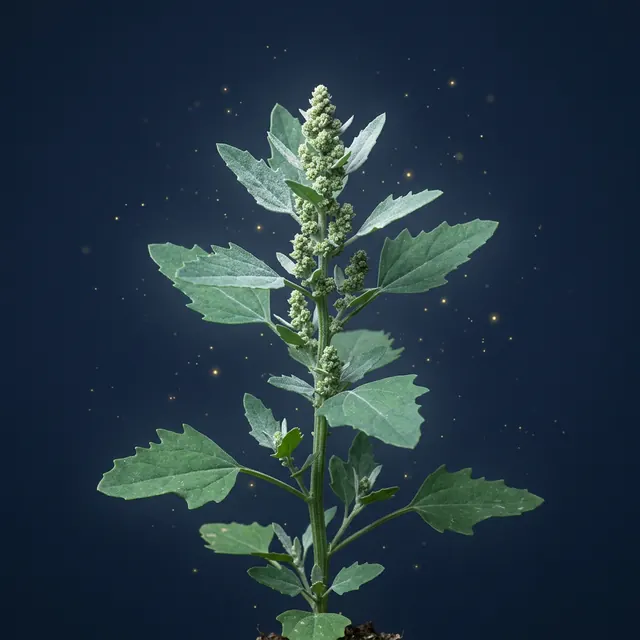
Fat hen - lamb's quarters
Chenopodium album L.
Polish folk names: lebioda
Traditional use
No EMA monograph. In the past the herb and root were given for coughs and chronic bronchitis, and externally for wounds; today fat hen is not used in herbal medicine. It is above all a wild vegetable: the young leaves are rich in protein, vitamin C and provitamin A. It was eaten in the lean season before the harvest and in wartime; during the siege of Leningrad it protected people from scurvy.
What it looks like
Annual weed from a few centimetres to 3 m tall, covered in a mealy, silvery coating, especially on young leaves and shoot tips. Leaves rhombic to lanceolate, unevenly toothed, blue-green; the upper ones entire. Stem grooved, often with purple blotches at the base of the leaf stalks. Tiny greenish flowers in clusters forming spikes and panicles.
Harvest
Gathered: young leaves and shoots, seeds.
When: May – September.
Form: kitchen (cooked like spinach), groats and flour from the seeds.
Lookalikes
- Black nightshade - POISONOUS (glycoalkaloids and saponins in the herb and unripe fruits); leaves dark green, without a mealy coating, flowers white with a yellow centre, fruits are black berries
- Orache (genus Atriplex) - similar, also edible; has different fruits in two bracteoles
The information is educational and describes traditional use according to EMA/HMPC monographs (the European Medicines Agency and its Committee on Herbal Medicinal Products).It does not replace the advice of a doctor or pharmacist. Never eat a plant you are not 100% sure you recognise.