

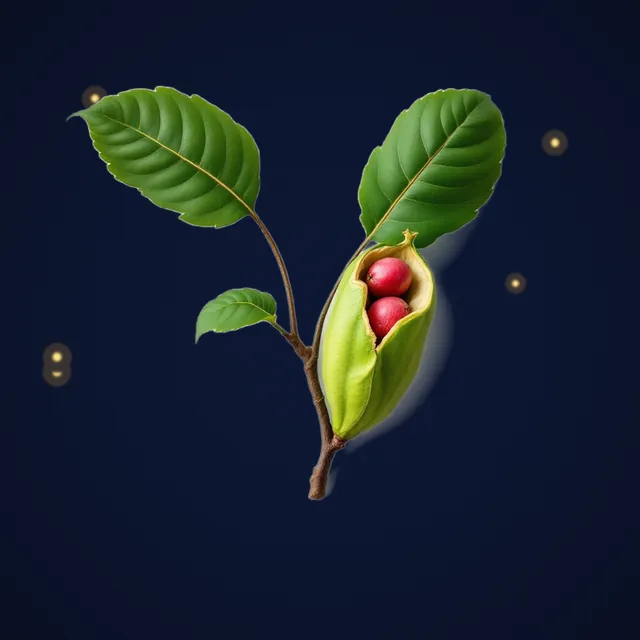
Kola nut
Cola nitida (Vent.) Schott & Endl., Cola acuminata (P.Beauv.) Schott & Endl.
Polish folk names: orzech kola, kola zaostrzona, guru, obi
Traditional use
According to the monograph of the European Medicines Agency (EMA), kola seeds are a traditional herbal product for symptoms of fatigue and a feeling of weakness. They work thanks to caffeine, of which they contain more than coffee beans. In West Africa fresh nuts are chewed and offered to guests as a greeting.
What it looks like
An evergreen tree 10–20 m tall with leathery, shiny leaves. Flowers cream with purple veins. The fruit is a star of several knobbly follicles; each holds several fleshy, pink, red or white seeds the size of a chestnut.
Harvest
Gathered: seeds.
Form: powder, liquid extract, chewing fresh seeds (tradition).
Lookalikes
- cacao tree – a relative from the same family, but the seeds sit in a large, ribbed fruit growing from the trunk
The information is educational and describes traditional use according to EMA/HMPC monographs (the European Medicines Agency and its Committee on Herbal Medicinal Products).It does not replace the advice of a doctor or pharmacist. Never eat a plant you are not 100% sure you recognise.