

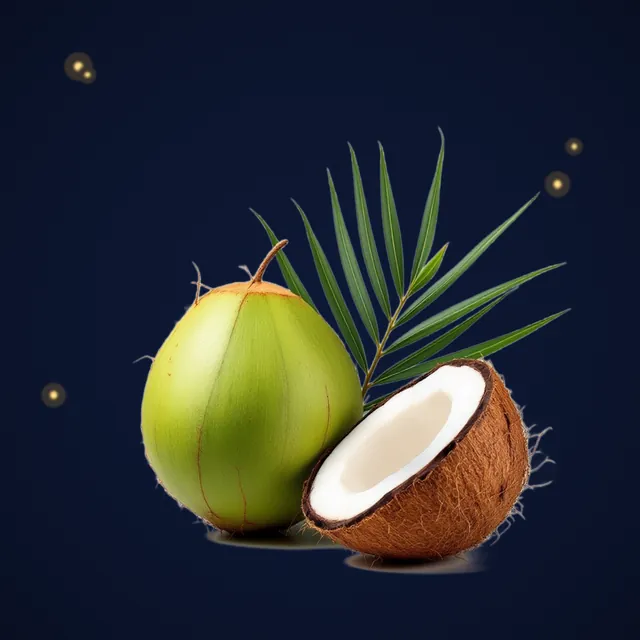
Coconut
Cocos nucifera L.
Polish folk names: palma kokosowa, orzech kokosowy, kopra
Traditional use
On Pacific islands and in India, coconut oil has been rubbed into the skin and hair for centuries, and the water from young nuts is drunk as a beverage. In the old Polynesian and Ayurvedic recipes the oil is above all a carrier for other herbs. Science confirms that the oil moisturises the skin. Eaten in large amounts, however, it raises “bad” LDL cholesterol, because it consists mainly of saturated fats.
What it looks like
A palm up to 30 m tall with a single, ringed trunk and a crown of feathery leaves 4–6 m long. The fruit is a drupe: under the smooth skin lies a thick, fibrous layer, and under it a hard shell with three “eyes”. Inside are white flesh and water.
Harvest
Gathered: seed flesh (copra), woda kokosowa, oil from the flesh.
Form: oil, milk and water (food).
Lookalikes
- sea coconut (Lodoicea maldivica) – a palm from the Seychelles with giant, two-lobed seeds, a completely different plant
The information is educational and describes traditional use according to EMA/HMPC monographs (the European Medicines Agency and its Committee on Herbal Medicinal Products).It does not replace the advice of a doctor or pharmacist. Never eat a plant you are not 100% sure you recognise.