

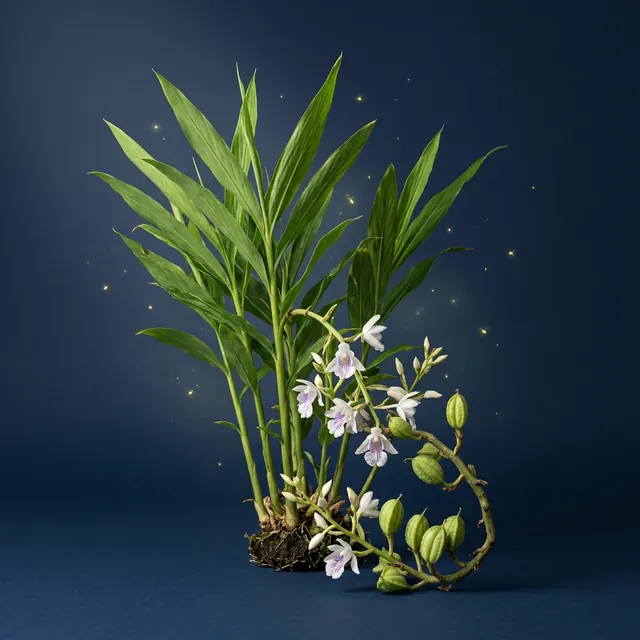
Malabar cardamom
Elettaria cardamomum (L.) Maton
Polish folk names: kardamon, kardamon zielony, kardamon cejloński, królowa przypraw
Traditional use
A spice for coffee, tea, baking and dishes, an ingredient of spice blends. Traditionally it stimulated the appetite and aided digestion. Laboratory studies describe effects of the oil (e.g. antibacterial), but there are no clinical studies in humans; there is no EMA monograph.
What it looks like
Perennial of the ginger family, 2–4 m, with long, narrowly lanceolate leaves. Flowers white to pale violet, in long, loose inflorescences growing from the ground. The fruit is a three-angled, pale green capsule 1–2 cm long with 15–20 brownish-black, aromatic seeds.
Harvest
Gathered: fruit (capsule), seeds.
Form: spice.
Lookalikes
- Black cardamom (Amomum subulatum): large, dark brown, wrinkled pods with a smoky scent
- “Bleached” cardamom: the same species, pods decolorised
The information is educational and describes traditional use according to EMA/HMPC monographs (the European Medicines Agency and its Committee on Herbal Medicinal Products).It does not replace the advice of a doctor or pharmacist. Never eat a plant you are not 100% sure you recognise.