

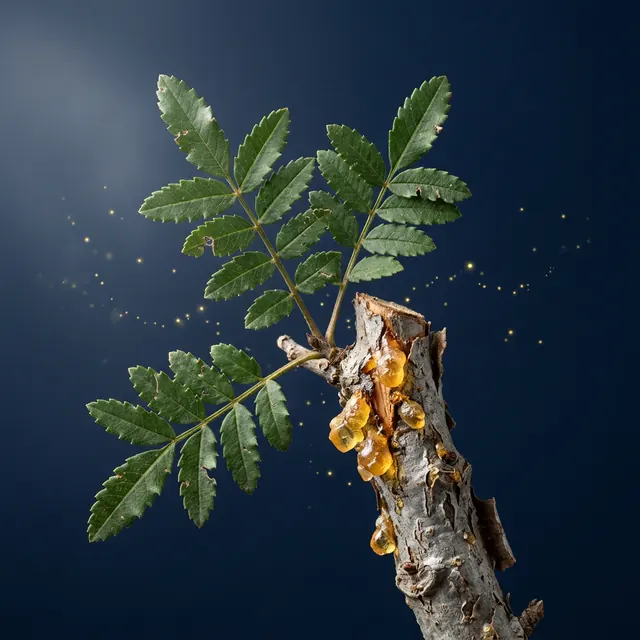
Indian frankincense – boswellia
Boswellia serrata Roxb. ex Colebr.
Polish folk names: boswellia, olibanum indyjskie, kadzidło indyjskie, salai guggul
Traditional use
In Indian medicine the resin was used for arthritis, spinal pain and catarrh of the airways; since antiquity it has also been an incense. A Cochrane review (2014) on herbs for osteoarthritis found high-quality evidence from 2 small studies: an enriched extract over 90 days reduced pain by about 17 points on a 0–100 scale compared with placebo. However, there are few studies and they concern specific extracts. There is no EMA monograph.
What it looks like
A tree of the dry forests of India with pinnate leaves with toothed leaflets. Resin oozes from the cut bark and hardens into yellow-brown, translucent grains and lumps with a resinous scent.
Harvest
Gathered: resin (gum resin).
Form: tablets with extract, frankincense.
Lookalikes
- Carter's frankincense (Boswellia sacra) and B. papyrifera: other species that yield frankincense; the composition of the resins differs
The information is educational and describes traditional use according to EMA/HMPC monographs (the European Medicines Agency and its Committee on Herbal Medicinal Products).It does not replace the advice of a doctor or pharmacist. Never eat a plant you are not 100% sure you recognise.