

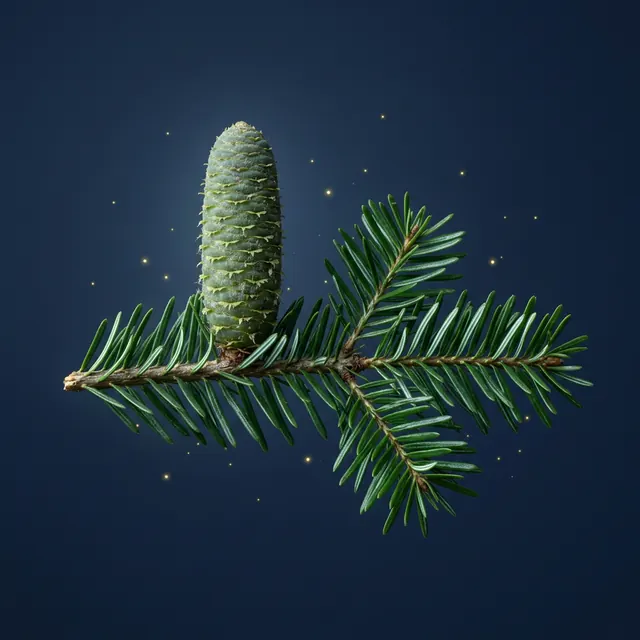
Silver fir
Abies alba Mill.
Polish folk names: jodła biała, cetyna jodłowa (gałązki)
Traditional use
No EMA monograph. The herbal raw materials are one-year-old twigs collected in autumn and winter, needles and resin. An essential oil is distilled from them, which in folk medicine is used for rubbing in rheumatic pains, for baths and for inhalation in inflammations of the throat and bronchi (expectorant effect). A 2023 review of studies describes mainly laboratory and animal results; there is no strong evidence in humans.
What it looks like
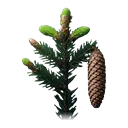
Tall tree with a straight trunk and light ash-grey, smooth bark with resin blisters; an old fir has a flat top – the “stork's nest”. Needles flat, about 2.5 cm, blunt or notched at the tip, glossy dark green above, with two white stripes beneath, arranged comb-like on both sides of the twig. Cones cylindrical, about 15 cm, standing upright on the branches and disintegrating on the tree.
Harvest
Gathered: one-year-old twigs with needles (cetyna), needles, resin.
When: January, February, October, November, December.
Form: essential oil (rubbing in, bath, inhalation), bath.
Lookalikes
- Yew - STRONGLY POISONOUS; needles also flat, but pointed, without white stripes underneath, no cones, with red arils; it is protected
- Norway spruce - four-angled, prickly needles all around the twig; cones hang down
The information is educational and describes traditional use according to EMA/HMPC monographs (the European Medicines Agency and its Committee on Herbal Medicinal Products).It does not replace the advice of a doctor or pharmacist. Never eat a plant you are not 100% sure you recognise.