

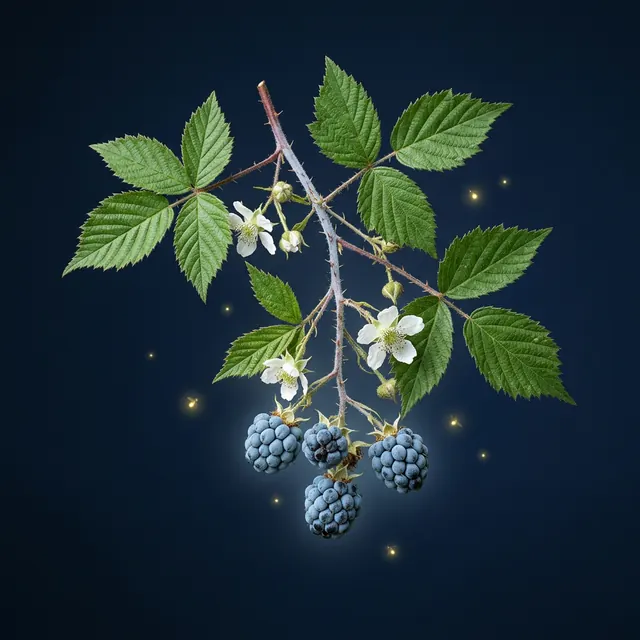
Dewberry
Rubus caesius L.
Polish folk names: ostrężyna, popielica
Traditional use
In folk medicine the leaves, rich in tannins, were used like the leaves of other blackberries: as an astringent for diarrhoea and for rinsing the mouth and throat. The dried fruit was used like raspberries for low-grade fevers. The fruit is edible raw and preserved; the leaves are used for teas. It has no EMA monograph of its own and there are no clinical studies.
What it looks like
Low shrub, 0.5–2 m, with thin, trailing shoots that are bluish-frosted and bear small straight thorns. Leaves with three leaflets. White flowers. Fruits made up of a few large drupelets, black with a bluish, waxy bloom like a plum's.
Harvest
Gathered: leaf, fruit.
When: May – September.
Form: infusion of the leaves, tea from fermented leaves, fruit (kitchen, juices, jams).
Lookalikes
- other blackberries – fruit black and shiny, without a bluish bloom; harmless
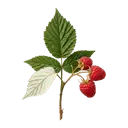
- raspberry – red fruit, hollow in the middle; harmless
The information is educational and describes traditional use according to EMA/HMPC monographs (the European Medicines Agency and its Committee on Herbal Medicinal Products).It does not replace the advice of a doctor or pharmacist. Never eat a plant you are not 100% sure you recognise.