

European ash
Fraxinus excelsior L.
Polish folk names: jesion
Traditional use
Traditionally (EMA/HMPC) ash leaf relieves minor joint pain and increases the amount of urine to flush the urinary tract in mild complaints, as supportive treatment. In folk medicine an infusion of the leaves was also used as a mild laxative and in mixtures for rheumatism.
What it looks like
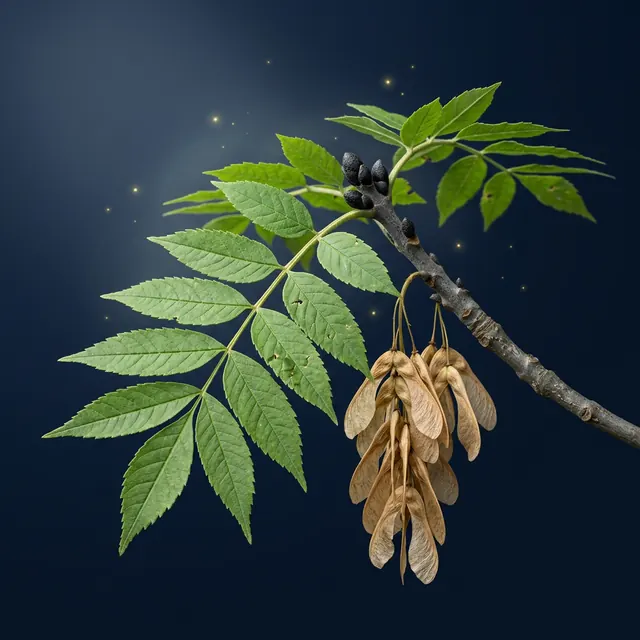
Tall tree (up to 40 m) with light grey bark that cracks with age. Buds matt, black – the most reliable feature. Leaves opposite, odd-pinnate, with 9–15 lanceolate, serrated leaflets. Flowers before the leaves develop, with tiny, dark purple flowers in panicles. Fruits are narrow, flat winged nutlets (samaras) in drooping bunches.
Harvest
Gathered: leaf.
When: May – June.
Form: infusion, decoction.
Lookalikes
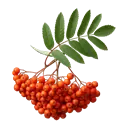
- Rowan - also pinnate leaves, but arranged alternately, not in pairs, and the fruits are red balls in corymbs
- Elder - also opposite and pinnate leaves, but with only 5-7 leaflets, unpleasantly scented; elder leaves and raw fruits are poisonous
The information is educational and describes traditional use according to EMA/HMPC monographs (the European Medicines Agency and its Committee on Herbal Medicinal Products).It does not replace the advice of a doctor or pharmacist. Never eat a plant you are not 100% sure you recognise.