

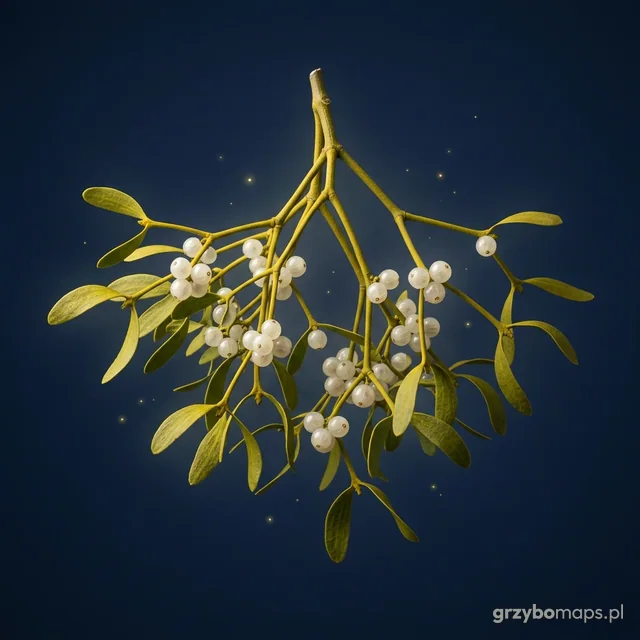
Mistletoe
Viscum album L.
Polish folk names: jemioła, ptasi lep
Traditional use
Traditionally used for circulatory disorders, and in anthroposophic medicine in oncology. The HMPC concluded that the monograph requirements (neither traditional nor well-established use) are not met.
What it looks like
A semi-parasitic, evergreen shrub shaped like a ball on tree branches. Shoots forked, leaves leathery, yellow-green, in pairs. In winter white, sticky, translucent berries.
Harvest
Gathered: herb (young shoots with leaves).
When: January, February, March, November, December.
Lookalikes
- Pine and fir mistletoe: subspecies on conifers, very similar in appearance
- Holly: spiny leaves, red fruit – also poisonous
The information is educational and describes traditional use according to EMA/HMPC monographs (the European Medicines Agency and its Committee on Herbal Medicinal Products).It does not replace the advice of a doctor or pharmacist. Never eat a plant you are not 100% sure you recognise.