

Henna
Lawsonia inermis L.
Polish folk names: henna, hina, mehndi
Traditional use
Powdered lawsonia leaves have been dyeing hair, nails and skin a reddish brown for at least four thousand years: from Egyptian mummies to bridal mehndi patterns in India. [TRADITION] Arabic medicine and Ayurveda applied henna paste to the skin of the feet and hands for cooling and to minor skin lesions. Today it is above all a cosmetic.
What it looks like
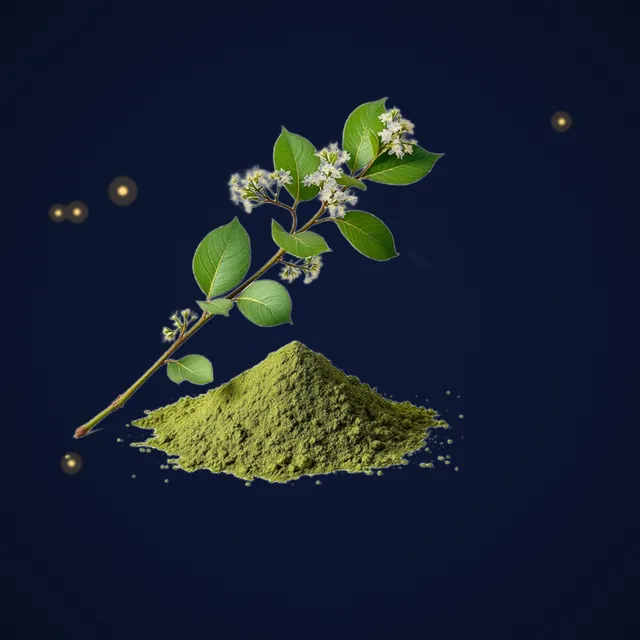
A branched shrub 2–6 m tall, sometimes with thorns at the tips of the twigs. Leaves small, elliptical, opposite. Small, white or pinkish, strongly scented flowers in panicles. The fruit is a brown capsule the size of a pea.
Harvest
Gathered: leaves.
Form: dye paste (external).
Lookalikes
- dyer’s indigo (“black henna” of plants) – a blue dye from a different plant
- cassia (“neutral henna”, Senna italica) – does not dye
The information is educational and describes traditional use according to EMA/HMPC monographs (the European Medicines Agency and its Committee on Herbal Medicinal Products).It does not replace the advice of a doctor or pharmacist. Never eat a plant you are not 100% sure you recognise.