

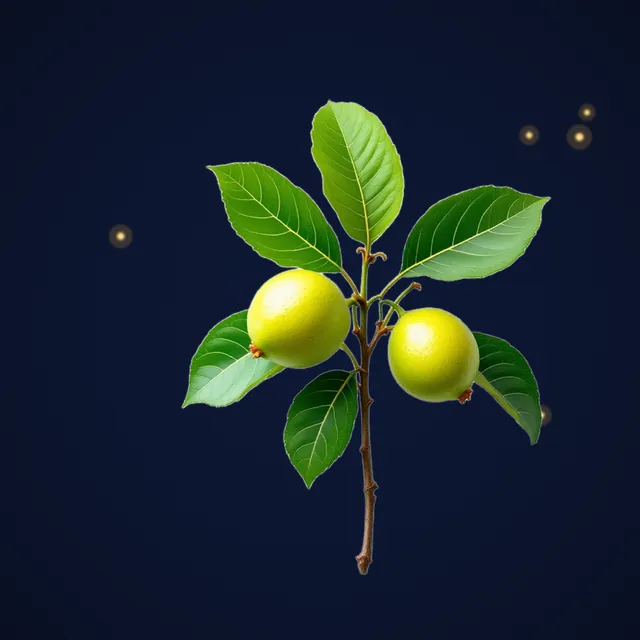
Common guava
Psidium guajava L.
Polish folk names: gruszla właściwa, guawa, guayaba
Traditional use
A decoction of guava leaves is a household remedy for diarrhoea throughout the tropics, from Mexico to the Philippines. A few small clinical studies suggest that it shortens acute diarrhoea, but the evidence is weak. The fruit is ordinary food, very rich in vitamin C. In the Philippines the leaf decoction is also used to wash minor wounds.
What it looks like
A small tree 3–8 m tall with smooth, coppery, peeling bark. Leaves oval, rough, with sunken veins. Flowers white, with a brush of stamens. Fruit round or pear-shaped, yellow-green, with pink or white flesh and hard seeds.
Harvest
Gathered: leaves, fruits.
Form: leaf decoction, fruit (food).
Lookalikes
- strawberry guava (Psidium cattleyanum) – smaller, red fruits and smooth, shiny leaves
The information is educational and describes traditional use according to EMA/HMPC monographs (the European Medicines Agency and its Committee on Herbal Medicinal Products).It does not replace the advice of a doctor or pharmacist. Never eat a plant you are not 100% sure you recognise.