

Pomegranate
Punica granatum L.
Polish folk names: granat, granat właściwy, jabłko granatu
Traditional use
The fruits are eaten raw, and the juice – sweet-tart, rich in acids, sugars and vitamin C – is added to drinks and dishes. In Mediterranean and Asian medicine a decoction of the bark and root was used against tapeworms (it contains the alkaloids pelletierine and isopelletierine), and a decoction of the flowers for diarrhoea. Analyses of studies show no strong evidence that pomegranate fruits improve health; the results of clinical studies are inconsistent. No EMA monograph.
What it looks like
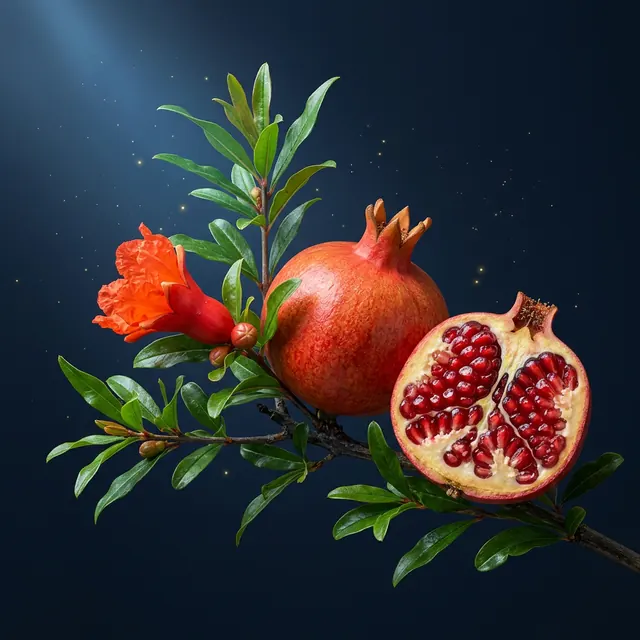
Shrub or small tree, 3–5 m, young branches thorny. Leaves opposite, elliptic-lanceolate, 3–8 cm, glossy, entire. Flowers orange-red, bell-shaped, about 4 cm, with a fleshy red calyx and numerous stamens. Fruit the size of an apple, with a leathery red rind and a crown formed by the sepals; inside, hundreds of seeds in juicy, ruby-red arils.
Harvest
Gathered: fruit (seed arils, juice), (formerly: fruit peel, bark, flowers).
Form: juice, kitchen.
Lookalikes
- dwarf pomegranate in pots – ornamental, small fruits
- persimmon (kaki) – also an autumn fruit with a calyx, but with flesh without seeds
The information is educational and describes traditional use according to EMA/HMPC monographs (the European Medicines Agency and its Committee on Herbal Medicinal Products).It does not replace the advice of a doctor or pharmacist. Never eat a plant you are not 100% sure you recognise.