

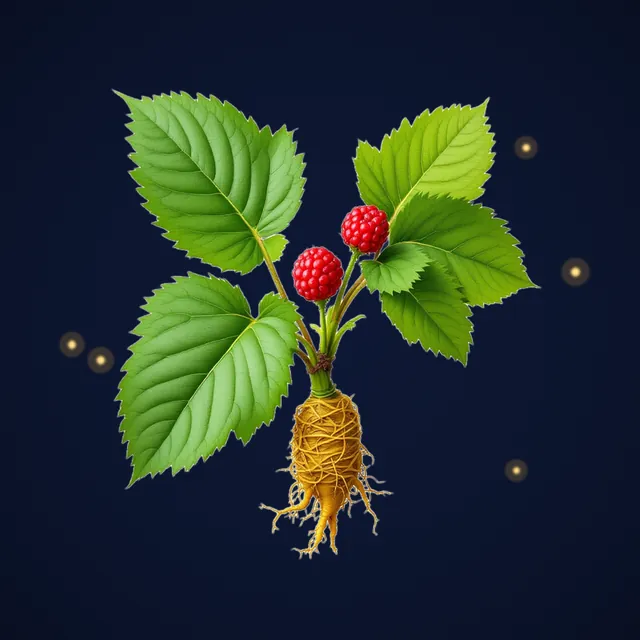
Goldenseal
Hydrastis canadensis L.
Polish folk names: goldenseal, złota pieczęć, hydrastis
Traditional use
[TRADITION] The Cherokee and the Iroquois used the yellow rhizome of goldenseal as a dye and for washing the eyes, mouth and skin. In the 19th century it became a fashionable remedy of American eclectic physicians. It contains berberine and hydrastine. The American institute NCCIH states that there is no reliable evidence that it helps with colds or other ailments.
What it looks like
A low woodland perennial 20–40 cm tall. On the hairy stem two large, palmately lobed, wrinkled leaves. One small flower without petals, with a tuft of white stamens. Fruit red, similar to a raspberry. Rhizome knotty, bright yellow inside.
Harvest
Gathered: rhizome with roots.
Form: extracts (supplements), rinse (tradition).
Lookalikes
- goldthread (Coptis) – also a yellow, berberine-containing rhizome, a common substitute and adulterant
- barberry – a shrub with berberine in its bark
The information is educational and describes traditional use according to EMA/HMPC monographs (the European Medicines Agency and its Committee on Herbal Medicinal Products).It does not replace the advice of a doctor or pharmacist. Never eat a plant you are not 100% sure you recognise.