

Masterwort
Peucedanum ostruthium (L.) W.D.J. Koch (syn. Imperatoria ostruthium L.)
Polish folk names: miarz, imperatoria, cesarskie ziele, Rhizoma Imperatoriae
Traditional use
Formerly grown in village gardens as a medicinal plant. The rhizome was used for chronic stomach and intestinal disorders and liver complaints, as a general tonic. In the Alps herbal spirits are still flavoured with it. It contains essential oil and coumarins, including ostruthin and furanocoumarins (imperatorin, oxypeucedanin). Research concerns cells and bacteria in the laboratory; there are no clinical studies and no EMA monograph.
What it looks like
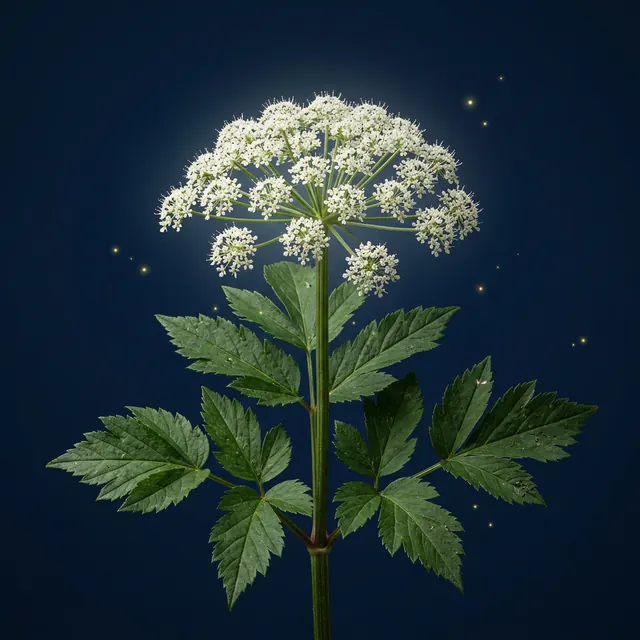
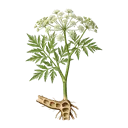
Perennial, 30–100 cm, with a strong, spicy scent, a spindle-shaped, many-headed rhizome and underground runners. Lower leaves long-stalked, 1–3 times ternate, with broad, toothed, often three-lobed segments up to 10 cm. Flowers white or pinkish in a magnificent compound umbel of 20–50 umbellets. Fruits roundish, flat, with winged margins.
Harvest
Gathered: rhizome.
When: March, April, September, October.
Form: decoction, tincture, spice for vodkas.
Lookalikes
- water hemlock (Cicuta virosa) and other poisonous umbellifers with white umbels – especially near water
- wild angelica and garden angelica – also white umbels in the mountains; leaves and scent differ
- Sosnowsky’s hogweed – gigantic, strongly phototoxic; dangerous to touch
The information is educational and describes traditional use according to EMA/HMPC monographs (the European Medicines Agency and its Committee on Herbal Medicinal Products).It does not replace the advice of a doctor or pharmacist. Never eat a plant you are not 100% sure you recognise.