

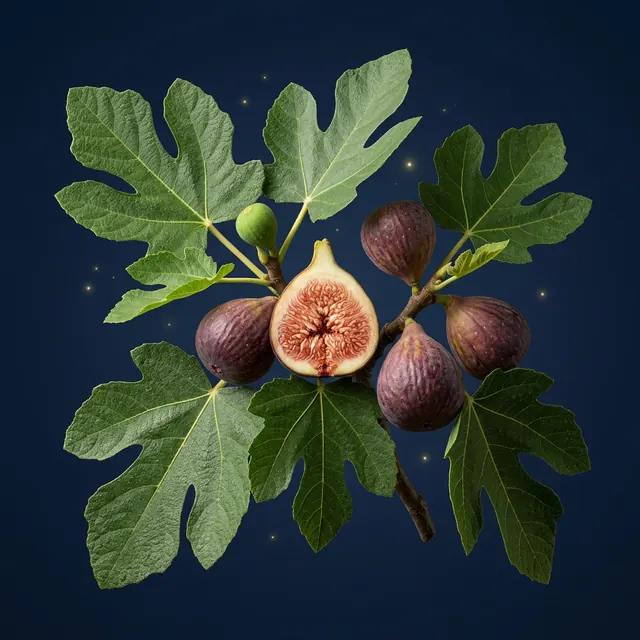
Common fig
Ficus carica L.
Polish folk names: figa, figa pospolita, figa karyjska, drzewo figowe
Traditional use
Figs are above all food – fresh or dried fruit. The folk medicine of southern countries recommended preserves and decoctions of figs for constipation and stomach catarrh, and a decoction of the leaves for cough and colds. A 2024 review of studies describes a lot of polyphenols in figs and many effects in the laboratory and in animals, but clinical studies are few. There is no EMA monograph. In Poland the fig tree grows only in cultivation (in pots or sheltered gardens).
What it looks like
Shrub or tree up to 10 m, with light grey, smooth bark and thick shoots. All parts contain white milky sap. Leaves large, up to 12 cm (often more), palmately 3–5-lobed, rough above. Flowers hidden inside a fleshy, urn-shaped flower axis. The “fruit” is a pear-shaped infructescence (fig), green, purple or brown, with numerous tiny nutlets inside.
Harvest
Gathered: infructescence (fig) – fresh or dried, (formerly: leaf, milky sap).
Form: kitchen (dried figs), preserve, decoction of dried figs.
Lookalikes
- weeping fig and other potted figs (Ficus) – the sap is also irritating, the fruits are inedible
- black and white mulberry – also members of the mulberry family with milky sap, but the fruits are like blackberries, leaves heart-shaped
The information is educational and describes traditional use according to EMA/HMPC monographs (the European Medicines Agency and its Committee on Herbal Medicinal Products).It does not replace the advice of a doctor or pharmacist. Never eat a plant you are not 100% sure you recognise.