

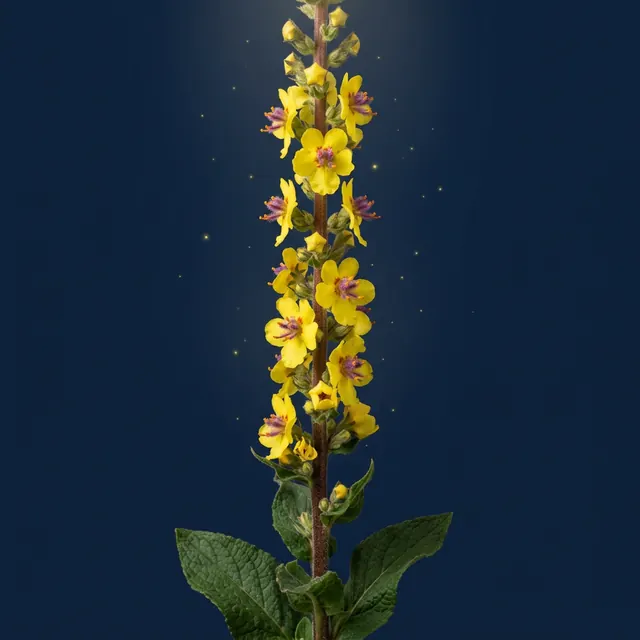
Common mullein
Verbascum nigrum L.
Traditional use
In folk medicine it was used for kidney disease as a diuretic. The EMA monograph on mullein flower concerns other species (small-flowered, large-flowered and woolly mullein), not this one. In a study on rats (2014), extracts of the herb, flowers, leaves and stems increased urine output, and the effect was linked to flavonoids. No studies in humans.
What it looks like
Biennial 30–100 cm tall, with a single stem, angular above. Leaves ovate, the lower ones with a heart-shaped base, sparsely hairy above, grey beneath from star-shaped hairs. Yellow flowers 1.5–2.5 cm, with a red spot at the base, in clusters in a long, spike-like raceme. Stamens densely covered in violet hairs – the best identifying feature.
Harvest
Gathered: flower, herb (aerial parts).
When: June – September.
Form: infusion.
Lookalikes
- large-flowered and small-flowered mullein – leaves thickly felted, stamens hairy whitish or yellow; a raw material with an EMA monograph
- purple foxglove (rosette of leaves in the first year) – leaves are also softly hairy; deadly poisonous
The information is educational and describes traditional use according to EMA/HMPC monographs (the European Medicines Agency and its Committee on Herbal Medicinal Products).It does not replace the advice of a doctor or pharmacist. Never eat a plant you are not 100% sure you recognise.