

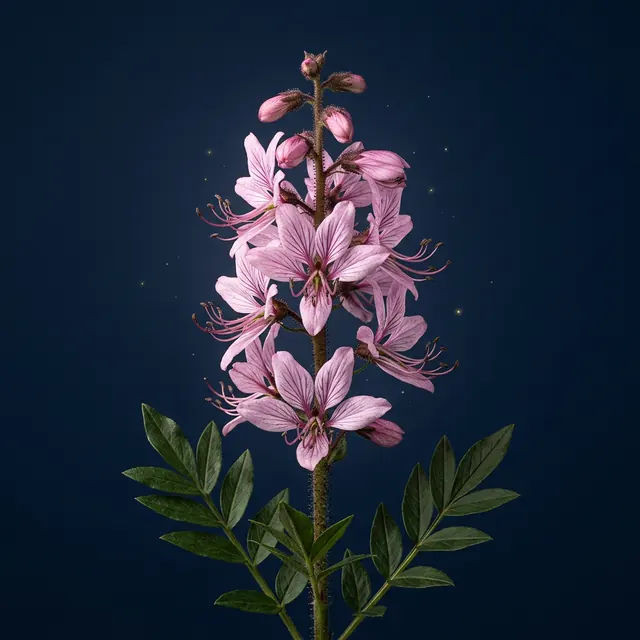
Burning bush
Dictamnus albus L.
Polish folk names: dyptam, krzew Mojżesza, gorejący krzew
Symptoms of poisoning
After touching the plant and exposing the skin to sun, usually after 1–2 days: redness, burning blisters and weals resembling burns or marks from a beating, then dark discolouration lasting months. A case recurring every summer for 5 years in a gardener growing burning bush has been described.
What it looks like
Strongly aromatic perennial, 50–120 cm, densely glandular in the upper part. Leaves dark green, odd-pinnate, with ovate, pointed, finely serrated leaflets – similar to ash leaves. Flowers large, up to 5 cm, pinkish-white or pink with darker purple veins, slightly zygomorphic, with long, curved stamens, in terminal racemes (May–July). The fruit is a 5-chambered capsule with shiny black seeds.
What it is sometimes confused with
- ash (seedlings) – similar odd-pinnate leaves, but without glands and scent
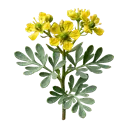
- common rue – also a phototoxic plant of the rue family, with yellow flowers
- garden perennials with pink clusters (e.g. lupin) – different leaves, harmless to the skin
The information is educational and describes traditional use according to EMA/HMPC monographs (the European Medicines Agency and its Committee on Herbal Medicinal Products).It does not replace the advice of a doctor or pharmacist. Never eat a plant you are not 100% sure you recognise.