

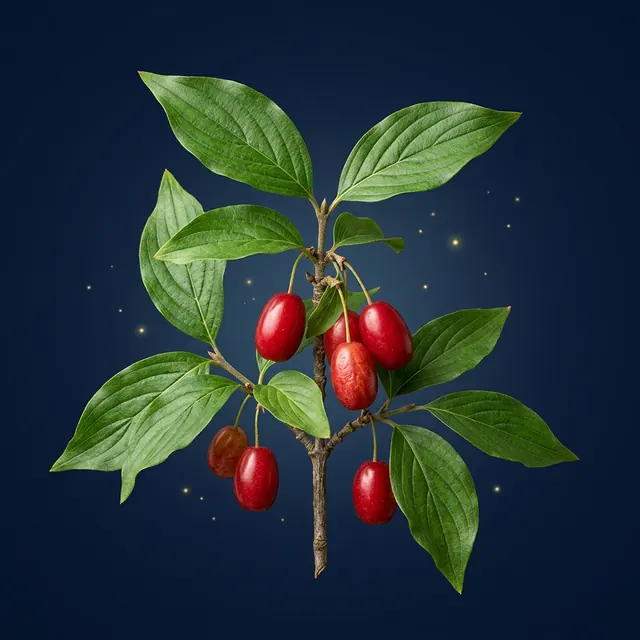
Cornelian cherry
Cornus mas L.
Polish folk names: dereń właściwy, dereń
Traditional use
No EMA monograph. Above all an edible fruit, rich in tannins, polyphenols, vitamin C and anthocyanins. In the folk medicine of Central Asia and Iran the fruits and leaves were used, among other things, for diarrhoea and fever. Studies (mainly laboratory and animal studies, a few small ones in humans) suggest an effect on blood sugar and fats - too little for recommendations.
What it looks like
Shrub or small tree, 3–10 m. Flowers in March and April before the leaves appear: tiny yellow 4-petalled flowers in globular umbels. Leaves opposite, ovate-elliptic, 5–10 cm, long-pointed, with arching veins. Fruits oblong, cherry-red drupes 1–4 cm, tart and sour, with one hard stone.
Harvest
Gathered: fruit.
When: August – October.
Form: kitchen (jam, marmalade, pickled fruits), tincture (dereniówka).
Lookalikes
- yew - red, cup-shaped arils with a dark seed, needle-like leaves; seeds and needles deadly poisonous
- common dogwood - black fruits, white flowers after the leaves have developed; inedible
- barberry - small, oblong, red fruits in racemes, shoots with thorns
The information is educational and describes traditional use according to EMA/HMPC monographs (the European Medicines Agency and its Committee on Herbal Medicinal Products).It does not replace the advice of a doctor or pharmacist. Never eat a plant you are not 100% sure you recognise.