

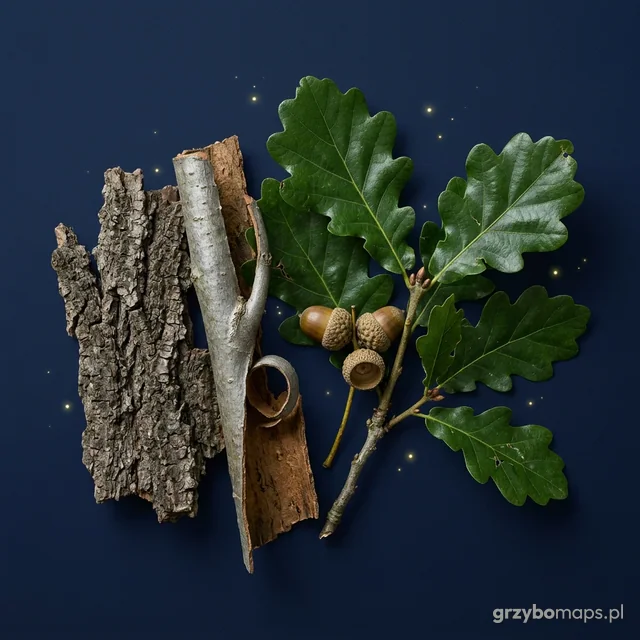
Oak
Quercus robur L., Q. petraea (Matt.) Liebl., Q. pubescens Willd.
Polish folk names: kora dębowa
Traditional use
Traditionally (EMA/HMPC) used symptomatically for mild diarrhoea, mild inflammations of the mouth and skin, and for burning and itching in haemorrhoids. It acts as an astringent thanks to tannins.
What it looks like
A huge, long-lived tree with thick, fissured bark. Leaves with rounded lobes at the sides. Fruits – acorns in cups, in pedunculate oak on long stalks.
Harvest
Gathered: bark of young branches.
When: March – May.
Form: decoction, rinse, compress.
The information is educational and describes traditional use according to EMA/HMPC monographs (the European Medicines Agency and its Committee on Herbal Medicinal Products).It does not replace the advice of a doctor or pharmacist. Never eat a plant you are not 100% sure you recognise.