

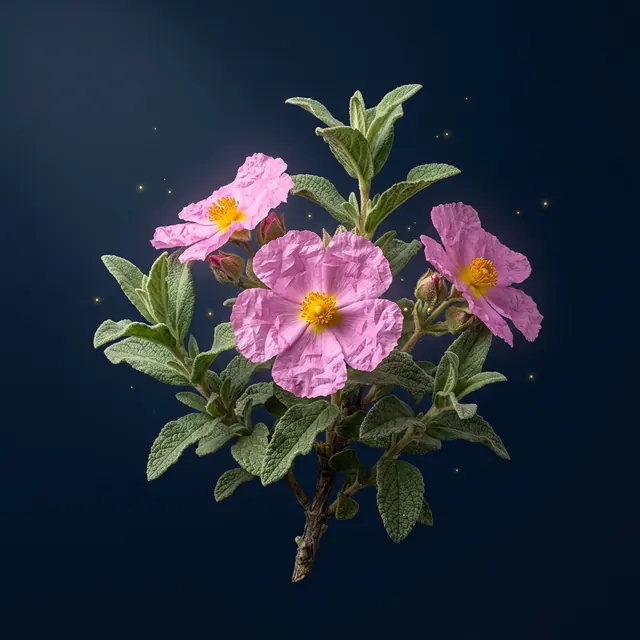
Grey-leaved cistus
Cistus × incanus L. (w handlu często C. creticus L.)
Polish folk names: czystek, czystek siwy, cistus
Traditional use
In the folk medicine of Mediterranean countries it was used for urinary tract infections, catarrh of the digestive and respiratory tracts, and skin diseases. Rich in polyphenols. In one placebo-controlled study (160 people) an extract eased cold symptoms; in another, chewing gum with cistus and skullcap extract improved the condition of the gums. These are single studies – the fashionable promises of “cleansing” and treating Lyme disease have no evidence. There is no EMA monograph.
What it looks like
Dense shrub up to 1–1.5 m. Leaves grey-green, ovate, wrinkled, up to 5 cm, with glands that secrete resin. Flowers pink to purple, 3–7 cm, with 5 petals crumpled like tissue paper and a tuft of yellow stamens.
Harvest
Gathered: herb (leaves with shoots).
Form: infusion, rinse.
Lookalikes
- Cretan rock rose (Cistus creticus): very similar, often sold under the name “Cistus incanus”
- Rock-rose (Helianthemum): a native relative with smaller, usually yellow flowers
The information is educational and describes traditional use according to EMA/HMPC monographs (the European Medicines Agency and its Committee on Herbal Medicinal Products).It does not replace the advice of a doctor or pharmacist. Never eat a plant you are not 100% sure you recognise.