

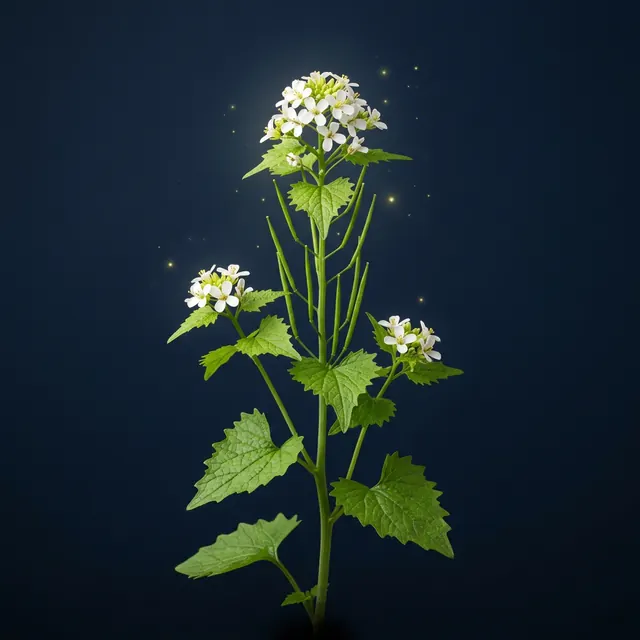
Garlic mustard
Alliaria petiolata (M.Bieb.) Cavara & Grande
Polish folk names: czosnkowe ziele, bździucha
Traditional use
No EMA monograph. In folk medicine, an infusion of the herb was used against worms (roundworms), for cramps, colds and scurvy, and fresh leaves or leaf juice were applied to slow-healing wounds and ulcers. The leaves are rich in vitamins C and A and taste of garlic with mustard; garlic mustard seeds as a spice were found in vessels 6 thousand years old. A medicinal effect has not been confirmed in clinical studies.
What it looks like
Biennial 30–100 cm tall, smells of garlic when crushed. In the first year, an evergreen rosette of kidney-shaped leaves. In the second year, an upright stem with heart-shaped or triangular, coarsely toothed leaves on long stalks. Flowers small, white, 4-petalled, in a raceme at the top. Fruits are long, upright siliques with black seeds.
Harvest
Gathered: young leaves, flowers, seeds.
When: March – June.
Form: kitchen (raw leaves for salads, pesto, sandwiches), spice from the seeds.
Lookalikes
- Violets and ground-ivy – similar heart-shaped, scalloped leaves, but when crushed they do not smell of garlic
The information is educational and describes traditional use according to EMA/HMPC monographs (the European Medicines Agency and its Committee on Herbal Medicinal Products).It does not replace the advice of a doctor or pharmacist. Never eat a plant you are not 100% sure you recognise.