

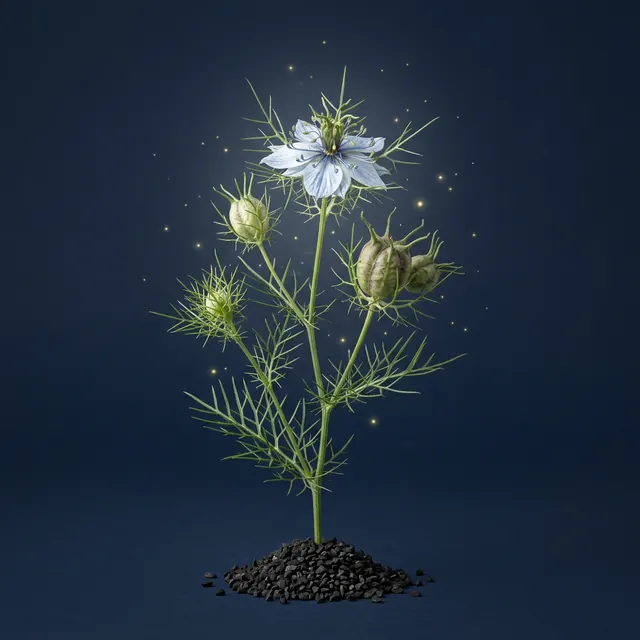
Black cumin
Nigella sativa L.
Polish folk names: czarny kmin, czarnuszka, kminek czarny, czarne ziarno
Traditional use
The seeds are a spice for bread, cheeses, pickles and meats, known since ancient Egypt (jars of seeds in Tutankhamun's tomb). In the folk medicine of the Middle East it is used for many complaints – from digestion to cough. Laboratory studies and small clinical studies are numerous, but they do not allow promises of a cure. There is no EMA monograph.
What it looks like
Annual plant, 10–40 cm, with leaves divided into narrow, linear segments. Flowers solitary, up to 3 cm, white to pale blue with blue veins. The fruit is an inflated capsule of 5–10 fused follicles, full of black, angular, cross-wrinkled seeds with a sharp, spicy taste.
Harvest
Gathered: seeds, seed oil.
When: September.
Form: spice, oil.
Lookalikes
- Love-in-a-mist (Nigella damascena): ornamental, with a “lace” of feathery leaves beneath the flower; not a spice
- Black sesame and onion seeds: similarly black, but sesame is smooth and flat
The information is educational and describes traditional use according to EMA/HMPC monographs (the European Medicines Agency and its Committee on Herbal Medicinal Products).It does not replace the advice of a doctor or pharmacist. Never eat a plant you are not 100% sure you recognise.