

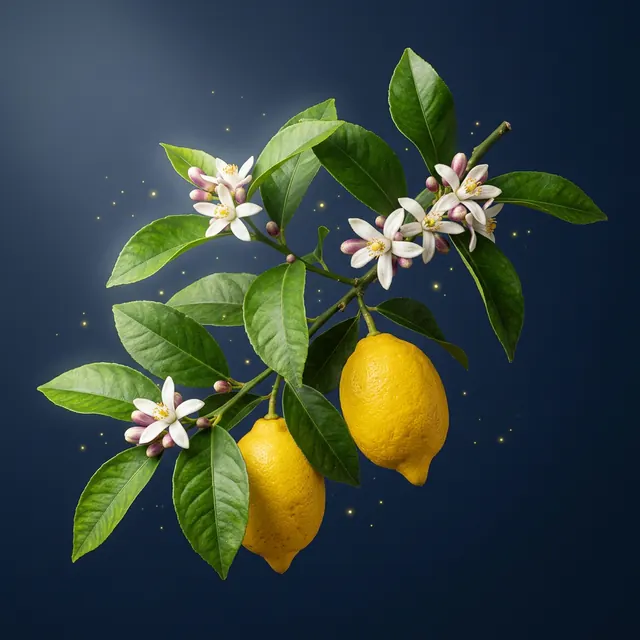
Lemon
Citrus limon (L.) Burm. f.
Polish folk names: cytryna, cytryna właściwa
Traditional use
The fruits contain a lot of citric acid, vitamin C and vitamin B1, and the peel contains essential oil. In old herbal books lemon juice was added to drinks for the sick, feverish and those with colds, and the peel to herbal mixtures for taste and scent. It is above all a food fruit and a spice. There is no EMA monograph for lemon fruit and no evidence that lemon cures a cold.
What it looks like
Evergreen small tree up to 5 m (rarely 10 m), usually thorny. Leaves ovate-lanceolate, glossy, light green, up to 15 cm, on slightly winged stalks. Flowers strongly fragrant, white, flushed red on the outside, 5-petalled, up to 3 cm. Fruits ovoid, with elongated ends, with a thick yellow rind and very sour, juicy flesh.
Harvest
Gathered: fruit (juice), peel.
Form: juice for drinks, kitchen, peel for infusions.
Lookalikes
- lime – smaller, green, thinner peel; also phototoxic
- citron – very thick, bumpy peel, little juice
- bitter orange – round, orange, bitter
The information is educational and describes traditional use according to EMA/HMPC monographs (the European Medicines Agency and its Committee on Herbal Medicinal Products).It does not replace the advice of a doctor or pharmacist. Never eat a plant you are not 100% sure you recognise.