

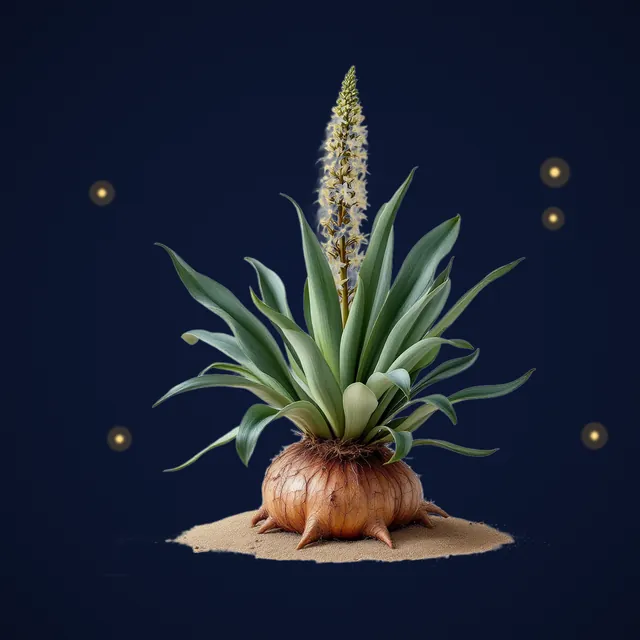
Sea squill
Drimia maritima (L.) Stearn (syn. Urginea maritima)
Polish folk names: cebula morska, urginia morska, oszloch morski, scilla
Symptoms of poisoning
Vomiting, abdominal pain, diarrhoea, then a slowed and irregular pulse, heart rhythm disturbances, convulsions. The juice of the fresh bulb causes burning and blisters on the skin.
What it looks like
A perennial with a huge bulb, 2 kg or more, sticking half out of the ground, in reddish or whitish scales. Leaves broad, fleshy, bluish-green, withering in summer. In autumn, already leafless, a shoot up to 1.5 m grows with hundreds of white, star-shaped flowers.
What it is sometimes confused with
- common onion and garlics – sea squill is many times larger, does not smell of onion and sticks half out of the ground
- Siberian squill – a small, blue garden plant, also poisonous
The information is educational and describes traditional use according to EMA/HMPC monographs (the European Medicines Agency and its Committee on Herbal Medicinal Products).It does not replace the advice of a doctor or pharmacist. Never eat a plant you are not 100% sure you recognise.