

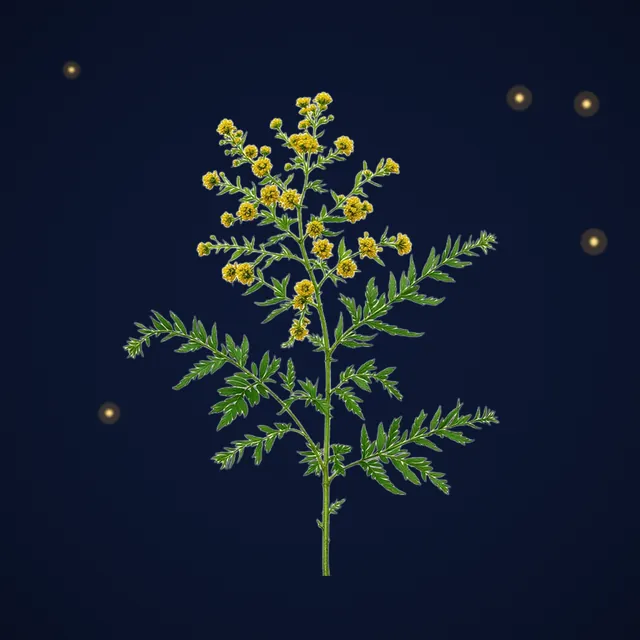
Sweet wormwood
Artemisia annua L.
Polish folk names: qinghao, słodki piołun, artemizja jednoroczna
Traditional use
[TRADITION] In the 4th century the Chinese physician Ge Hong advised, for intermittent fevers, squeezing the juice of the qinghao herb soaked in cold water. This hint led Tu Youyou to artemisinin, for which she received the Nobel Prize in 2015. Medicines with artemisinin derivatives, always combined with a second drug, are today the basis of malaria treatment.
What it looks like
An annual 0.5–2 m tall with a ribbed stem, reddish in autumn. Leaves 2–3 times pinnate, lacy, light green on both sides. Flower heads tiny, globular, yellow-green, in a loose panicle. It has a strong, sweet-camphor scent. In Poland it is naturalised along roadsides and on wasteland.
Harvest
Gathered: herb (as a source of artemisinin in industry).
When: August – September.
Form: infusion (tradition), artemisinin medicines (prescription only).
Lookalikes
The information is educational and describes traditional use according to EMA/HMPC monographs (the European Medicines Agency and its Committee on Herbal Medicinal Products).It does not replace the advice of a doctor or pharmacist. Never eat a plant you are not 100% sure you recognise.