

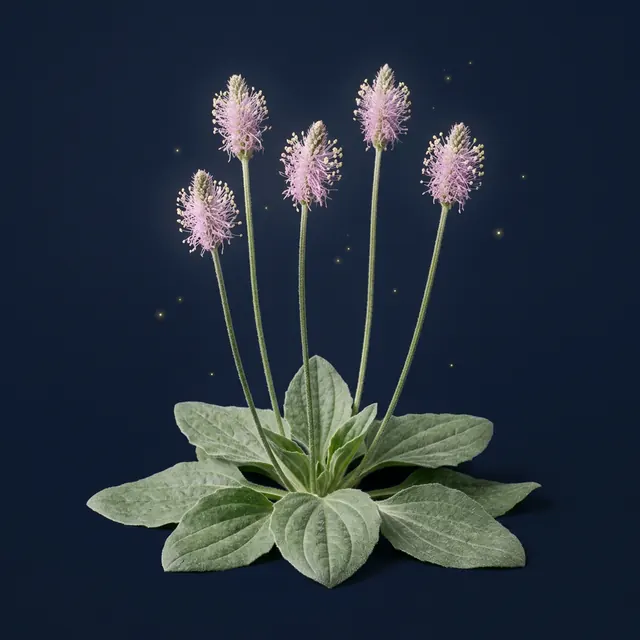
Hoary plantain
Plantago media L.
Traditional use
In folk medicine an infusion of the leaves was used for cough and catarrh of the respiratory tract, and baths with the infusion for wounds, ulcers and itchy skin. A 2021 review lists folk uses: anti-inflammatory, expectorant, stopping bleeding and helping healing, and young leaves as a vegetable for salads and cooking. The EMA monograph concerns only ribwort plantain, not this one. Hoary plantain is poorly studied – there are no clinical studies.
What it looks like
Perennial with a basal rosette of leaves lying flat on the ground. Leaves elliptic, with 5–9 veins, entire, shortly hairy, almost stalkless. Scape 3–50 cm, much longer than the leaves, bearing a short, cylindrical spike. Flowers fragrant, with very long lilac or pink stamen filaments – the spike looks like a pink brush.
Harvest
Gathered: leaves.
When: May – August.
Form: infusion, bath, kitchen (young leaves).
Lookalikes
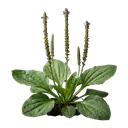
- greater plantain – leaves bare, broad, with long stalks, spike long and greenish; harmless
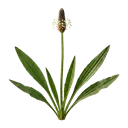
- ribwort plantain – leaves narrow, lance-shaped, spike short and dark; harmless, has an EMA monograph
- purple foxglove (rosette in the 1st year) – a rosette of softly hairy leaves; deadly poisonous
The information is educational and describes traditional use according to EMA/HMPC monographs (the European Medicines Agency and its Committee on Herbal Medicinal Products).It does not replace the advice of a doctor or pharmacist. Never eat a plant you are not 100% sure you recognise.