

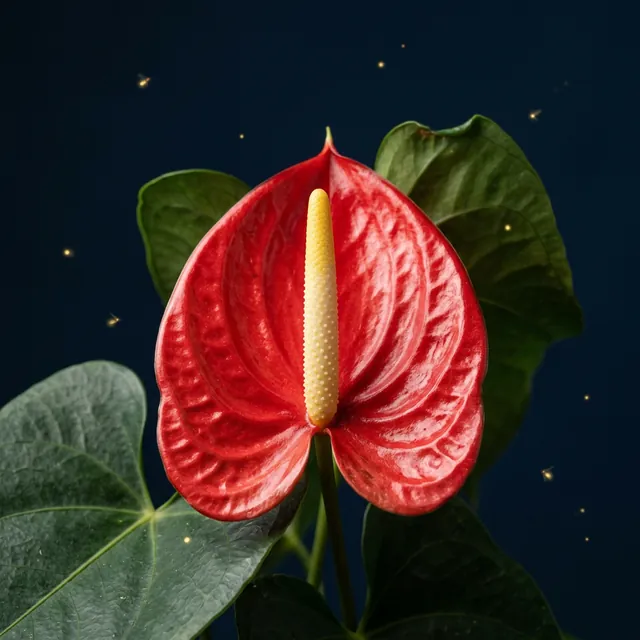
Anthurium
Anthurium andraeanum Linden ex André
Polish folk names: flamingowiec, antorium, palec flaminga
Symptoms of poisoning
After chewing a leaf or flower: burning, prickling mouth and tongue, drooling, swollen lips, difficulty swallowing, sometimes vomiting. The sap on the skin can cause redness and itching. Symptoms usually pass within hours, but swelling of the throat in a small child requires a doctor.
What it looks like
Houseplant, 30–70 cm. Leaves leathery, heart-shaped, dark green, long-stalked, growing from the base. The inflorescence is a glossy, heart-shaped "shield" (spathe) in red, pink or white, with a protruding, pale, club-shaped true flower spike.
What it is sometimes confused with
- peace lily – the white, narrow stalk-like leaf (spathe) covers the spike and is not glossy; anthurium has a red, pink or white, waxy-glossy heart-shaped "shield"
- common red poinsettia – has petal-like bracts and milky sap, no spike in the middle
The information is educational and describes traditional use according to EMA/HMPC monographs (the European Medicines Agency and its Committee on Herbal Medicinal Products).It does not replace the advice of a doctor or pharmacist. Never eat a plant you are not 100% sure you recognise.