

Upiór
Wąpierz, upir, wieszczy (Kashubian), vampire
A dead person who returns from the grave to harm the living and drink their blood. Belief in upiory was recorded among all Slavs; in Kashubia people spoke of the “wieszczy”, who was born in a caul. The European vogue for vampires began with official reports from Serbia in the 18th century.
How certain this knowledge is
Folk beliefs
How we know about this
An Old Rus copyist in 1047 signed himself “priest Upir Likhy”; “The Word of St Gregory” mentions offerings to upirs; 19th-century ethnography; Austrian reports from Serbia of 1725 and 1732.
What people believed
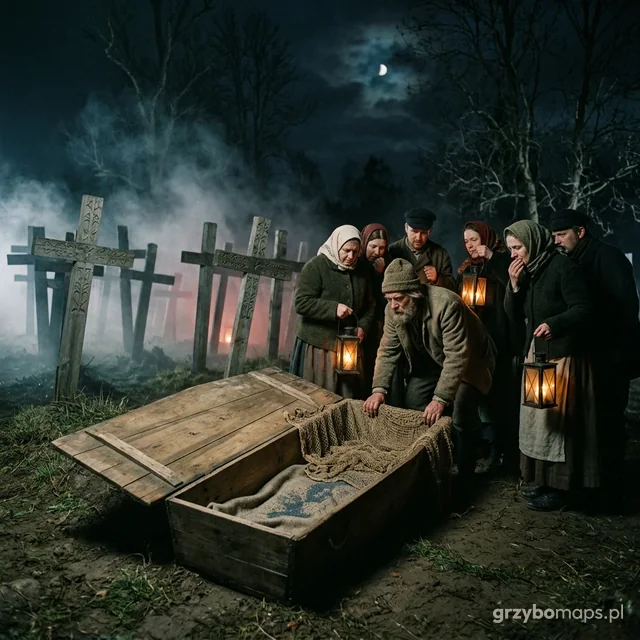
The grave was opened, the body pierced with a stake, the head cut off or the corpse burned. In Kashubia a fishing net or poppy seed was put into the wieszczy's coffin so that he would count the meshes and the grains instead of getting out.
Where
All Slavs
Fun fact
The word “vampire” entered the languages of Western Europe from Slavic after the famous cases of Petar Blagojević (1725) and Arnold Paole (1732), described by Austrian officials in Serbia.
The image is an artistic vision based on archaeology and descriptions, not a faithful copy.