

Sventovit
Svantevit, Suantouitus (Saxo); the form “Światowid” is later
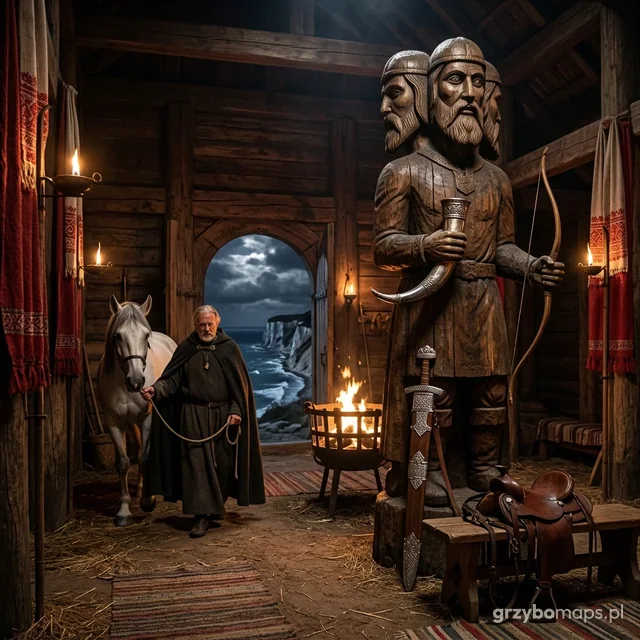
The god of the Rani of Rügen, worshipped in a temple on Cape Arkona. Saxo described his huge wooden statue with four heads on four necks, with a metal horn filled with wine in the right hand and the left arm bent in an arc at his side (formerly read as a bow in the hand). Beside him lay a large sword in a silver scabbard, a saddle and a bridle, and a white horse of the god was kept at the temple. The temple was destroyed by the Danes led by Bishop Absalon in 1168.
How certain this knowledge is
Confirmed in sources
How we know about this
Saxo Grammaticus, Gesta Danorum XIV (c. 1200): a description of the temple at Arkona destroyed by the Danes in 1168. Helmold of Bosau, Chronicle of the Slavs (c. 1170).
What people believed
Every year the priest foretold the harvest from the amount of wine in the horn. The white horse, which only the priest was allowed to ride, was led through rows of spears, and omens for war were read from its steps. The god had his own troop of 300 horsemen, and gifts flowed to him from many lands.
Where
Polabian Slavs (the Rani, Rügen)
Fun fact
The name “Światowid” became widespread only in the 19th century, mainly because of the Zbruch idol. That idol has no documented connection with the god of Arkona.
The image is an artistic vision based on archaeology and descriptions, not a faithful copy.