

Ślęża
Sobótka Mountain, Silensi (Thietmar)
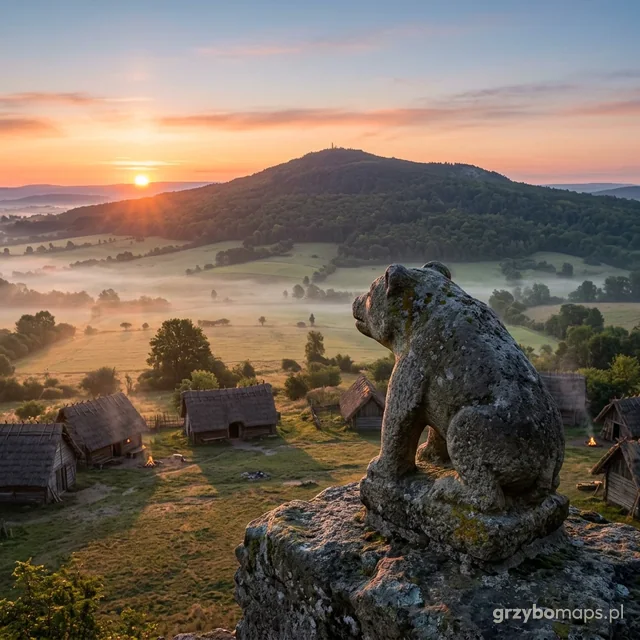
The highest peak of the Ślęża Massif (718 m) near Sobótka. Thietmar wrote in the 11th century that the local people worshipped this mountain because of its size and its pagan rites. On the summit and slopes there are stone ramparts and sculptures, e.g. the 'bear' and the 'maiden with a fish', but most researchers date them to pre-Slavic times, although their age and origin are disputed.
How certain this knowledge is
Confirmed in sources
How we know about this
Thietmar, Chronicle VII, 59 (c. 1018): a mountain worshipped by pagans for its size and rites; stone ramparts and sculptures.
What people believed
The cult of the mountain may have lasted for centuries, taken over by successive peoples. The name Ślęża is connected with the tribe of the Ślężanie and most likely with the name Silesia.
Where
Poland (Lower Silesia)
Fun fact
In the 12th century Piotr Włostowic founded an Augustinian monastery on the summit, which is often explained as a wish to christianise the old holy place.
The image is an artistic vision based on archaeology and descriptions, not a faithful copy.