

Podaga
Pogaga, Pogada (spelling variants); the reading *Potęg (Łuczyński) is a hypothesis
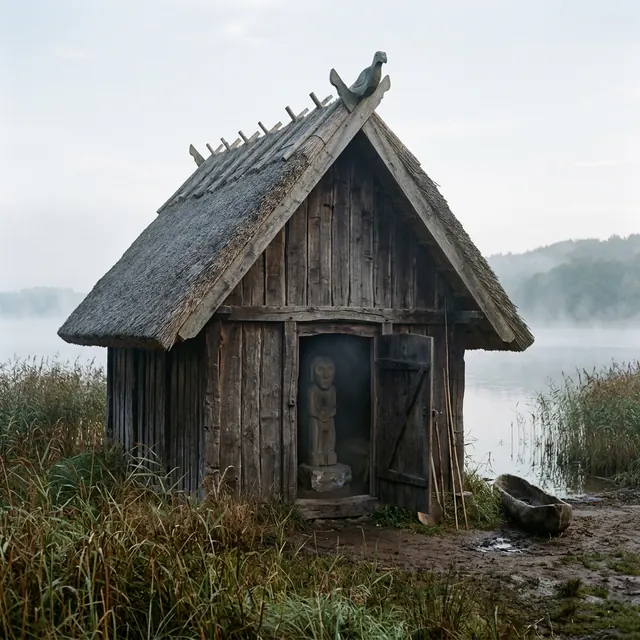
A deity of the Wagrians whose statue stood in the temple at Plön (today Plön in Schleswig-Holstein). It is mentioned only by Helmold in the 12th century. He gave neither its appearance nor its function. He wrote only that some Slavs set up statues in temples, like Podaga in Plön, while others worship deities in forests and groves without images.
How certain this knowledge is
Confirmed in sources
How we know about this
Helmold of Bosau, Chronica Slavorum (Chronicle of the Slavs), 12th century; interpretations: Aleksander Brückner, Leszek Moszyński, Michał Łuczyński.
What people believed
It is not known what she or he was in charge of, or whether Podaga was a goddess or a god. Brückner considered the name illegible. Leszek Moszyński and Michał Łuczyński read it as *Potęg, meaning "strong, sturdy". Other researchers saw in it a distorted Dazhbog.
Where
Wagria, Polabia (today Schleswig-Holstein, Germany)
Fun fact
Some older authors linked Podaga with Długosz's "Pogoda", and one of them even with the name Dagome from Mieszko I's document. Today these connections are considered unconvincing.
The image is an artistic vision based on archaeology and descriptions, not a faithful copy.