

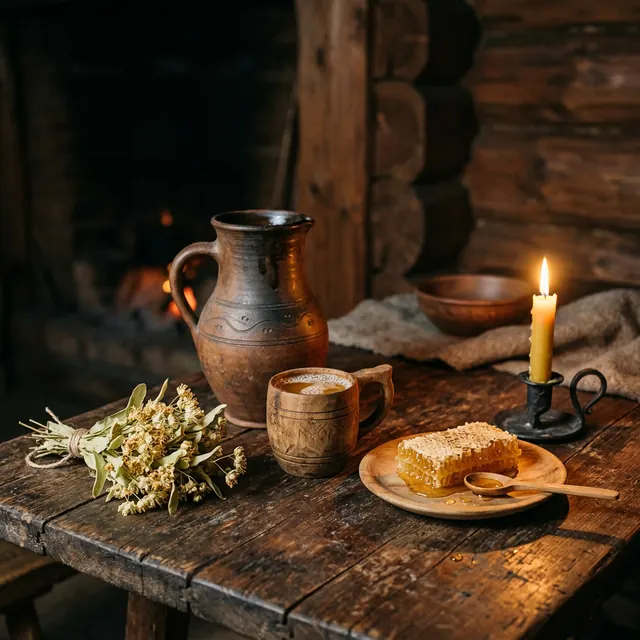
Mead
Miód sycony, półtorak, dwójniak, trójniak, czwórniak; lipiec, dębniak
An alcoholic drink made of fermented honey with water, most often linden honey. In the Piast state wine was scarce, so people drank beer and mead. Mead was expensive, however, and was served mainly on important occasions, e.g. weddings. Herbs, spices and fruit juices were added to the mead.
How certain this knowledge is
Confirmed in sources
How we know about this
Medieval and early modern sources (Ambrogio Contarini, 15th century; Jakub Haur, 17th century); Proto-Slavic *medъ.
What people believed
The Venetian Ambrogio Contarini wrote in the 15th century that the Poles, having no wine, make a drink from honey that "intoxicates people far more than wine". The most prized mead was one aged for a long time in oak barrels.
Where
All Slavs; especially Poland, Lithuania, Rus'
Fun fact
The Polish word "miód" shares a common Indo-European root with English mead and Sanskrit madhu. Since 2008 Polish meads have been registered in the European Union as a Traditional Speciality Guaranteed. It contains alcohol, so it is not a drink for children or pregnant women.
The image is an artistic vision based on archaeology and descriptions, not a faithful copy.