

Marzanna
Marzanna, Morena (in Czech), Death, śmiertka (Silesia)
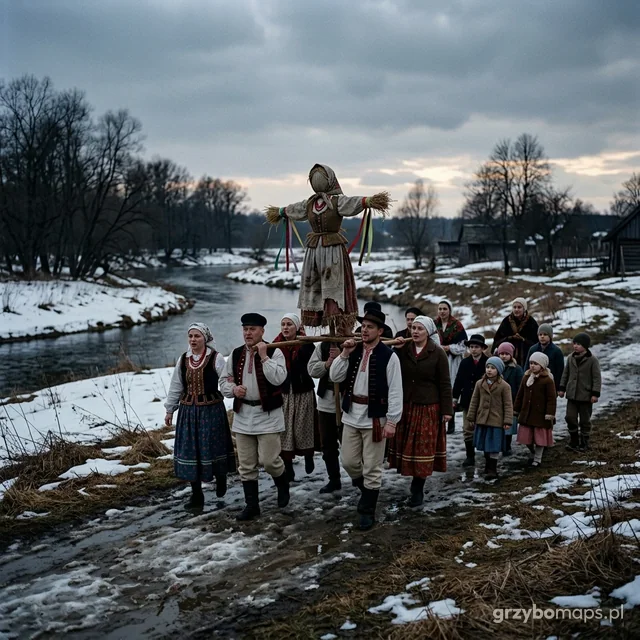
A straw effigy dressed in women's clothes, which during Lent was carried out of the village and drowned or burned. The oldest reliable record comes from the Poznań synodal statutes of c. 1420, which banned the rite of carrying out “death”. Długosz called Marzanna a goddess, but that is his interpretation; for village people it was an effigy of winter and death.
How certain this knowledge is
Folk beliefs
How we know about this
Synodal statutes of the Poznań diocese (c. 1420) forbidding the carrying out and drowning of the effigy called “death”; Długosz (Marzyanna as Ceres); 19th-century ethnography.
What people believed
It was believed that destroying the effigy drove winter, disease and death out of the village. On the way back one was not allowed to look behind, because evil might follow the people.
Where
Poland, Czech Republic, Slovakia, Lusatia
Fun fact
In Bohemia the fifth Sunday of Lent, when the effigy was carried out, was called Smrtná neděle, that is, Death Sunday. The date of 21 March is a 20th-century school custom.
The image is an artistic vision based on archaeology and descriptions, not a faithful copy.