
Bunkers in Mamerki
According to Koch's accounts and ground-penetrating radar surveys, a walled-up room was supposed to be under the foundation of one of the shelters.
 Enter the forest
Mamerki, Węgorzewo municipality, Masuria, woj. Warmian-Masurian
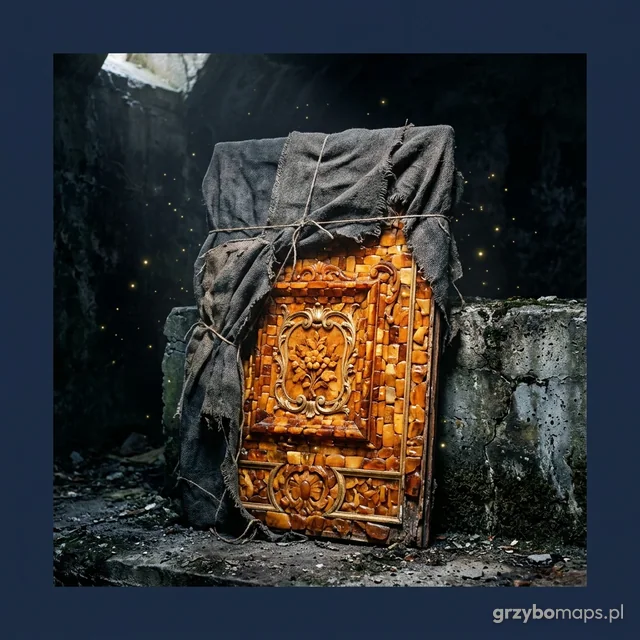
Amber panels given to Tsar Peter I, taken by the Germans from Tsarskoye Selo in 1941 to the castle in Königsberg. Europe's most famous lost treasure.
On the orders of Gauleiter Erich Koch, the chamber was packed into crates in Königsberg, where the trail goes cold in spring 1945. Koch, imprisoned in communist Poland, suggested various hiding places, including the bunkers in Mamerki, the former headquarters of the army high command. In 2016 and 2017 ground-penetrating radar indicated a void under one of the bunkers, but drilling revealed nothing.
Start from the bunker complex in Mamerki by Lake Mamry. The museum shows a replica of the chamber and the sites of the former drillings, and the surrounding forests of the Borki Forest and the trails around Węgorzewo are full of remnants of the old headquarters.
According to Koch's accounts and ground-penetrating radar surveys, a walled-up room was supposed to be under the foundation of one of the shelters.
Mamerki lies about 18 km from Hitler's headquarters in Gierłoż and is sometimes linked to the same network of leads.
The most common opinion among historians: the chamber burned during the battle for Königsberg castle in 1945.
The chamber certainly existed, but the last reliable information comes from Königsberg, and drilling in Mamerki hit only concrete; many historians believe it burned in 1945.