

Sweet flag
Acorus calamus
Polish folk names: tatarak, tatarskie ziele, kalmus, ajer
What it looks like
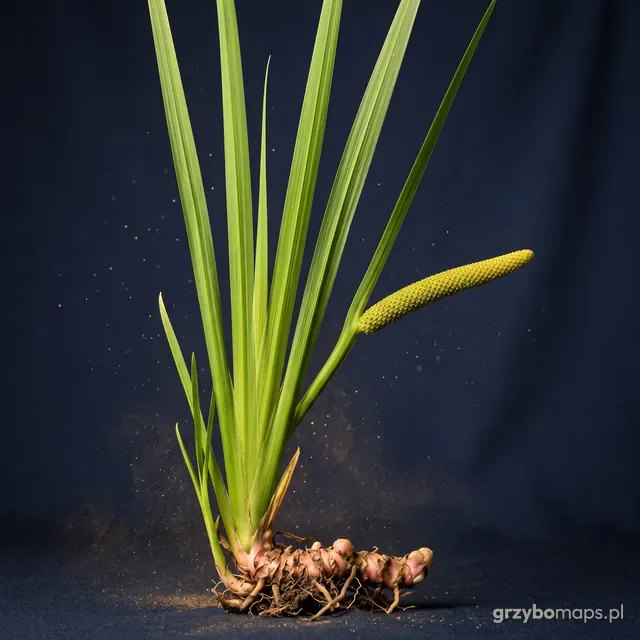
A water perennial up to 1.2 m tall, with flat, sword-shaped leaves that have a clear midrib and a slightly wavy edge. From the side of the three-angled stem a greenish-yellow flower spike a few centimetres long juts out at an angle. The thick, creeping rhizome smells strong and pleasant when broken. In Poland sweet flag does not set fruit.
Where it comes from
It comes from Asia. It reached Europe in the Middle Ages and now grows commonly in Poland along ponds, rivers and ditches. European plants have a triple set of chromosomes and are sterile, so they spread only by pieces of rhizome.
History
According to tradition, the Tatars brought sweet flag to Poland in the 13th century, believing that water where it grows is fit for horses and people to drink. Hence its Polish name, tatarak, although merchants and herbalists also spread the plant. At Pentecost houses, cowsheds and floors were decorated with it to ward off evil powers and insects. The rhizome was chewed for indigestion and even as a tobacco substitute.
Legend and truth
A claim circulates online that sweet flag is hallucinogenic because its asarone supposedly turns into an amphetamine-like substance in the body. This theory was put forward in the 1960s but was never confirmed. The story of the Tatars, on the other hand, is old enough to have given the plant its name.
Substances
Essential oil with beta-asarone (a lot in Asian varieties, less in European ones, almost none in North American ones), acorone, bitter compounds and tannins.
How it works
The bitter rhizome stimulates digestive juices, so it was traditionally used for poor appetite and bloating. In animal studies, extracts had calming and anticonvulsant effects. The usual amounts used in herbal medicine are not intoxicating.
What it is sometimes confused with
- yellow flag iris (Iris pseudacorus), poisonous
- broadleaf cattail
- branched bur-reed
Law in Poland
Calamus is neither protected nor controlled in Poland, and the rhizome can be bought in herbal shops. In the European Union, beta-asarone may not be added to food, and its content in foods and alcoholic drinks made with calamus is limited.
Fun fact
Calamus rhizome is an ingredient in some bitter liqueurs and herbal vodkas, and in the past it was candied in sugar and eaten as a sweet.
Frequently asked questions
How does sweet flag work?
The bitter rhizome stimulates digestive juices, so it was traditionally used for poor appetite and bloating. In animal studies, extracts had calming and anticonvulsant effects. The usual amounts used in herbal medicine are not intoxicating.
What are the risks of sweet flag?
Dangerous. Beta-asarone caused tumours in rats and damaged genetic material. For this reason, the US Food and Drug Administration (FDA) banned calamus as a food additive in 1968, and the European Medicines Agency recommends limiting beta-asarone intake. Calamus products should not be taken by pregnant or breastfeeding women or by children. Large amounts of the rhizome cause nausea and vomiting.
Sweet flag and the law in Poland: what is allowed?
Calamus is neither protected nor controlled in Poland, and the rhizome can be bought in herbal shops. In the European Union, beta-asarone may not be added to food, and its content in foods and alcoholic drinks made with calamus is limited.