

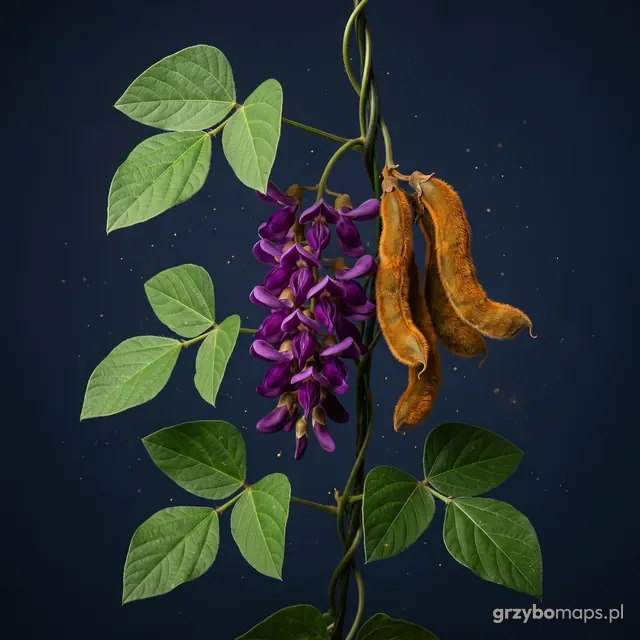
Velvet bean
Mucuna pruriens
Polish folk names: mukuna, fasola aksamitna, kapikachhu
What it looks like
A climber up to 15 m long, with leaves made of three leaflets. Dark purple or whitish pea-like flowers hang in long clusters. S-shaped pods up to 10 cm long are covered with dense, orange-brown hairs that lodge in the skin and cause unbearable itching.
Where it comes from
Tropical Africa and Asia, especially India. It is grown for fodder, as green manure and as a medicinal plant.
History
In Ayurveda, the seeds, called kapikachhu, have been given for centuries as a tonic, an aphrodisiac and for the tremors now identified with Parkinson's disease. In the 20th century it turned out that they contain L-dopa, the same compound that is the main medicine for this disease.
Legend and truth
Myth: "mucuna is a natural Parkinson's cure and mood booster with no side effects". The L-dopa in the seeds really works, but its amount in supplements is not standardised, and self-treatment can do as much harm as an overdose of the medicine.
Substances
L-dopa (a few per cent in the seeds), serotonin and other amines; in the pod hairs, the enzyme mucunain, which causes itching.
How it works
L-dopa is converted into dopamine in the brain. In small clinical studies, seed powder relieved Parkinson's symptoms much like the medicine, but such treatment needs a doctor's supervision. Reports of improved male fertility come from small studies.
What it is sometimes confused with
- inne gatunki mukuny
- fasola wielokwiatowa
Law in Poland
Mucuna is not a controlled substance in Poland. Extracts are sold as dietary supplements, while L-dopa medicines are prescription-only.
Fun fact
For years, mucuna pod hairs were an ingredient of the "itching powder" sold in joke shops.
Frequently asked questions
How does velvet bean work?
L-dopa is converted into dopamine in the brain. In small clinical studies, seed powder relieved Parkinson's symptoms much like the medicine, but such treatment needs a doctor's supervision. Reports of improved male fertility come from small studies.
What are the risks of velvet bean?
Dangerous. Nausea, vomiting, drops in blood pressure, involuntary movements and insomnia, and in large amounts agitation and psychotic symptoms. Dangerous in combination with MAO inhibitors and Parkinson's medicines. Acute poisonings have been described when undercooked seeds were eaten during famines. The pod hairs cause severe itching and skin inflammation, and serious irritation in the eye.
Velvet bean and the law in Poland: what is allowed?
Mucuna is not a controlled substance in Poland. Extracts are sold as dietary supplements, while L-dopa medicines are prescription-only.