

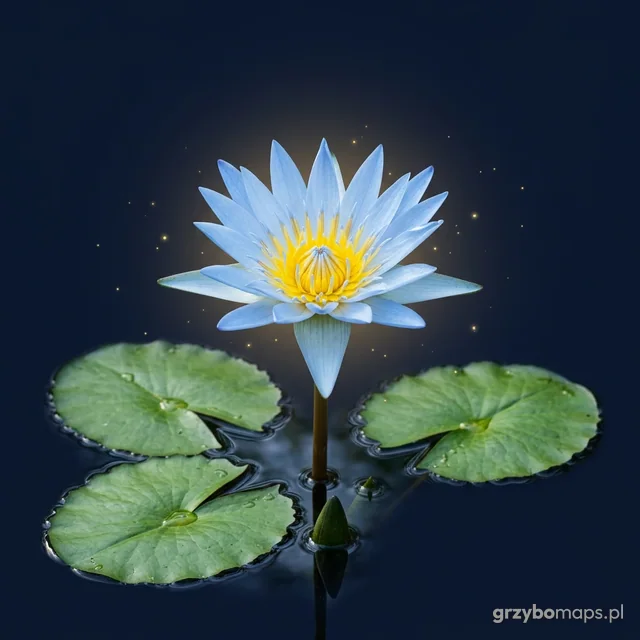
Blue water lily
Nymphaea caerulea (syn. Nymphaea nouchali var. caerulea)
Polish folk names: lotos błękitny, niebieski lotos, egipski lotos, blue lotus, seszen
What it looks like
An aquatic plant with round, floating leaves with a deep notch, 25–40 cm wide. The flowers rise above the water, are 10–15 cm in diameter, with light blue or blue-violet petals and a yellow centre; they open in the morning and close for the night.
Where it comes from
The Nile basin and other parts of Africa, as well as Yemen and Israel; introduced in South America and grown in water gardens all over the world.
History
In ancient Egypt it was probably the blue water lily, and not the Indian lotus, that played the role of the sacred “lotus”: the flower, which emerges from the water in the morning and opens, and closes in the evening, symbolised the birth of the sun and rebirth. It was depicted in tomb paintings, on papyri and in ornaments – its petals were found in the tomb of Tutankhamun. In banquet scenes people can be seen smelling flowers, which is sometimes interpreted as proof of ritual use; a 2024 study detected traces of psychoactive plants in a Ptolemaic vase bearing the image of the god Bes.
Legend and truth
Myth: “the Egyptians got drunk on wine with lotus to experience ecstasy”. This interpretation of the paintings is popular on the internet, but disputed among Egyptologists – the flower had above all a symbolic meaning, and there is little direct evidence of “narcotic” use.
Substances
Aporphines – nuciferine and apomorphine (the content is variable and in some analyses of commercial products negligible), flavonoids.
How it works
A mild sedative and slightly euphoriant effect is attributed to it, related to the influence of the alkaloids on dopamine receptors. Scientific evidence is scant, and the composition of the available products is very inconsistent.
What it is sometimes confused with
- sacred lotus (Nelumbo nucifera)
- white water lily (Nymphaea alba)
- grzybienie północne (Nymphaea candida)
Law in Poland
Live plants, dried material, seeds, and extracts of Nymphaea caerulea are listed in the Polish schedule of controlled substances (new psychoactive substances), so trading in them is illegal.
Fun fact
The Polish white water lily and northern water lily are close relatives of the Egyptian lotus and are protected species in Poland.
Frequently asked questions
How does blue water lily work?
A mild sedative and slightly euphoriant effect is attributed to it, related to the influence of the alkaloids on dopamine receptors. Scientific evidence is scant, and the composition of the available products is very inconsistent.
What are the risks of blue water lily?
Dangerous. There are no safety studies and the composition of products is unpredictable; cases of acute psychiatric symptoms (confusion, agitation, hallucinations) requiring hospitalisation have been described. The effect of sedatives and alcohol may be intensified; drops in blood pressure and drowsiness are possible. Products sold as “lotus” are sometimes adulterated or confused with other plants.
Blue water lily and the law in Poland: what is allowed?
Live plants, dried material, seeds, and extracts of Nymphaea caerulea are listed in the Polish schedule of controlled substances (new psychoactive substances), so trading in them is illegal.