

Khat
Catha edulis
Polish folk names: kat, qat, czat, miraa, herbata abisyńska, herbata Buszmenów
What it looks like
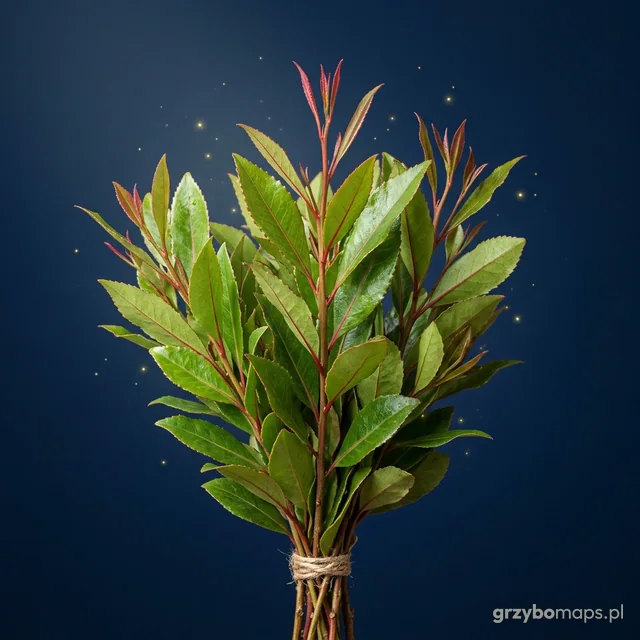
An evergreen shrub or small tree of the staff-vine family, usually a few metres tall in cultivation. The leaves are leathery, elliptical, serrated at the edge, with reddish veins and margins; young shoots are sometimes reddish. The flowers are small, white, five-parted.
Where it comes from
East and Southern Africa (Ethiopia, Kenya, Somalia) and the Arabian Peninsula; it is cultivated most in Yemen and Ethiopia.
History
Chewing fresh khat leaves has been part of social life in Yemen, Ethiopia and Somalia for centuries – afternoon khat gatherings (called maqil in Yemen) are an occasion for conversation, business and poetry. According to tradition the Sufis used it to stay awake during night prayers. In Yemen khat growing consumes a huge share of water and farmland, displacing food crops. With the Somali and Yemeni diaspora the custom reached Europe, which led to bans, including in the United Kingdom in 2014. In 1980 the WHO classified khat as a substance that can cause psychological dependence.
Legend and truth
Myth: “khat is an innocent herb like tea”. It contains cathinone – a natural equivalent of amphetamine, from which the synthetic “legal highs” of the cathinone group (e.g. mephedrone) are derived.
Substances
Cathinone (the main, unstable alkaloid of fresh leaves), cathine (norpseudoephedrine), norephedrine; tannins.
How it works
Cathinone acts similarly to amphetamine: it stimulates, causes euphoria and talkativeness, and reduces appetite and sleepiness. The effect appears during chewing and lasts a few hours, followed by a period of low mood and fatigue. Cathinone breaks down quickly after the leaves are picked, which is why fresh leaves are traditionally used.
What it is sometimes confused with
- other ornamental shrubs of the staff-vine family
Law in Poland
Plants, dried material, seeds, extracts and extracts of Catha edulis have been illegal in Poland since the 2009 amendment; cathinone is a psychotropic substance of group I-P (the strictest).
Fun fact
Synthetic cathinones such as mephedrone, which flooded the “legal highs” market around 2010, are chemical derivatives of the natural alkaloid of khat.
Frequently asked questions
How does khat work?
Cathinone acts similarly to amphetamine: it stimulates, causes euphoria and talkativeness, and reduces appetite and sleepiness. The effect appears during chewing and lasts a few hours, followed by a period of low mood and fatigue. Cathinone breaks down quickly after the leaves are picked, which is why fresh leaves are traditionally used.
What are the risks of khat?
Addictive. Chronic use is linked with psychological dependence, insomnia, hypertension, heart attacks, periodontal disease and changes in the mouth, constipation and liver damage. It can cause psychotic episodes, irritability and aggression. Use in pregnancy is linked with low birth weight. Khat inhibits the liver enzyme CYP2D6, which can change the effect of medicines.
Khat and the law in Poland: what is allowed?
Plants, dried material, seeds, extracts and extracts of Catha edulis have been illegal in Poland since the 2009 amendment; cathinone is a psychotropic substance of group I-P (the strictest).