

Damiana
Turnera diffusa
Polish folk names: hierba de la pastora
What it looks like
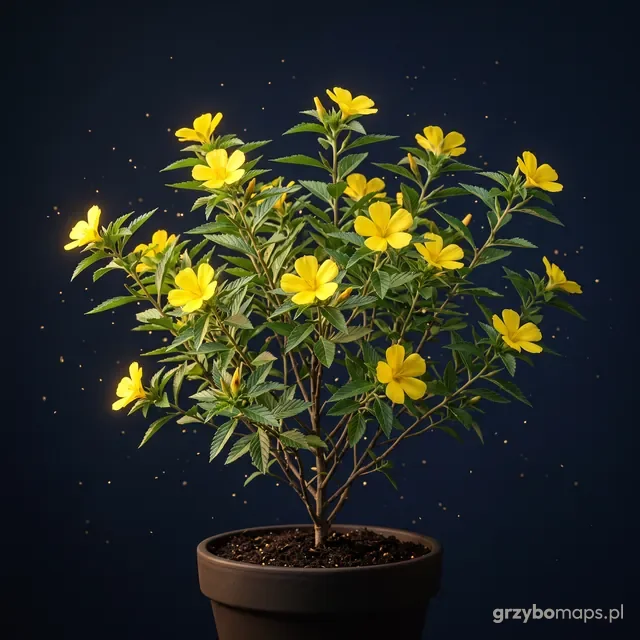
A small, aromatic shrub 1–2 m tall, with small, ovate, toothed leaves that are paler and hairy underneath. The flowers are yellow, five-petalled and solitary. Crushed leaves smell herbal and slightly fruity.
Where it comes from
Southern Texas, Mexico, Central America and the Caribbean, on dry, stony slopes.
History
Damiana was used in Mexican folk medicine as a tonic and for coughs and stomach complaints. At the end of the 19th century, American manufacturers began advertising it as an aphrodisiac, and that reputation has stuck ever since. In Mexico, a Damiana liqueur is made in a bottle shaped like a woman's figure.
Legend and truth
Myth: "damiana is a proven aphrodisiac and a mild intoxicant". An effect on libido has only been shown in rats, and stories of getting high are anecdotal. There are practically no clinical studies in humans.
Substances
Essential oil, flavonoids (apigenin, acacetin), arbutin, damianin, tannins and bitter compounds.
How it works
In animal studies, extracts increased sexual activity in rats and had a slight anti-anxiety effect. Typical amounts in teas are considered safe for adults, but nobody has confirmed that it works in humans.
What it is sometimes confused with
- other Turnera species (e.g. Turnera ulmifolia)
Law in Poland
Damiana is not controlled in Poland. The leaves are sold as a herb and as an ingredient of dietary supplements.
Fun fact
The genus Turnera was named after William Turner, a 16th-century English naturalist known as the father of English botany.
Frequently asked questions
How does damiana work?
In animal studies, extracts increased sexual activity in rats and had a slight anti-anxiety effect. Typical amounts in teas are considered safe for adults, but nobody has confirmed that it works in humans.
What are the risks of damiana?
Mild. Arbutin taken for a long time and in large amounts can strain the liver. In animals, damiana lowered blood sugar, which may matter for people on diabetes medication. There is no data on use during pregnancy or breastfeeding. Beware of "potency" products with damiana: they are sometimes spiked with prescription drugs.
Damiana and the law in Poland: what is allowed?
Damiana is not controlled in Poland. The leaves are sold as a herb and as an ingredient of dietary supplements.