

Calea
Calea zacatechichi (syn. Calea ternifolia)
Polish folk names: zioło snów, liść boga, dream herb, zacatechichi
What it looks like
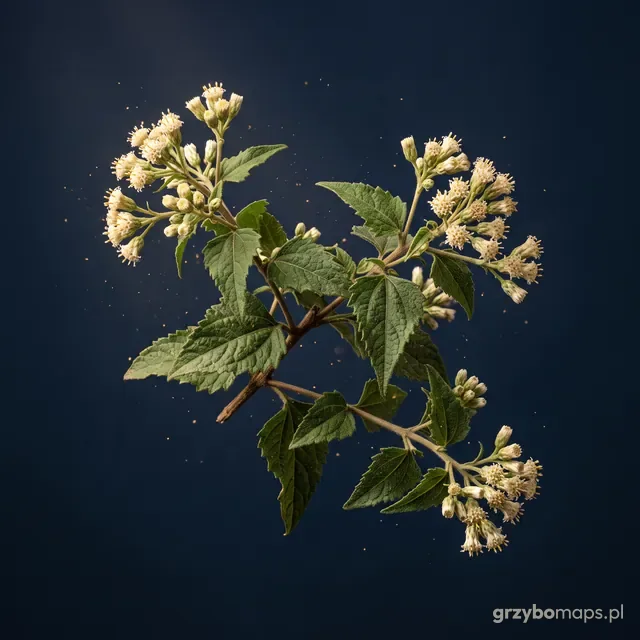
A shrub up to 1.5 m tall, with rough, triangular or ovate, toothed leaves that taste very bitter. The flowers are small and creamy white, gathered in dense heads at the shoot tips.
Where it comes from
From Mexico to Costa Rica, on dry slopes.
History
The Chontal people of the Mexican state of Oaxaca used the leaves to bring on vivid dreams in which they sought answers and prophecies. The leaves were also placed under the pillow. Traditionally it was also given for diarrhoea and fever.
Legend and truth
Myth: "Calea gives lucid dreams on demand". The only published human study, from 1986, found more light sleep and more frequent awakenings with remembered dreams in volunteers, but it was small and nobody has repeated it.
Substances
Sesquiterpene lactones (germacranolides) and flavonoids. It is not known which compounds are responsible for the effect on dreams.
How it works
The bitterness stimulates digestion. The effect on sleep and dreams is very poorly studied.
What it is sometimes confused with
- other Calea species
- mugwort, also called a dream herb
Law in Poland
Since the amendment to the Act on Counteracting Drug Addiction of 20 March 2009, Calea zacatechichi (plants, dried material, seeds and extracts) has been on Poland's list of narcotic drugs in group I-N, so possessing it is a crime.
Fun fact
The leaves are so bitter that in users' accounts it is the taste, not the dreams, that stands out as the strongest memory.
Frequently asked questions
How does calea work?
The bitterness stimulates digestion. The effect on sleep and dreams is very poorly studied.
What are the risks of calea?
Dangerous. Nausea, vomiting and headaches have been described. There are no safety studies and no data on drug interactions or use in pregnancy.
Calea and the law in Poland: what is allowed?
Since the amendment to the Act on Counteracting Drug Addiction of 20 March 2009, Calea zacatechichi (plants, dried material, seeds and extracts) has been on Poland's list of narcotic drugs in group I-N, so possessing it is a crime.